Your Cart is Empty

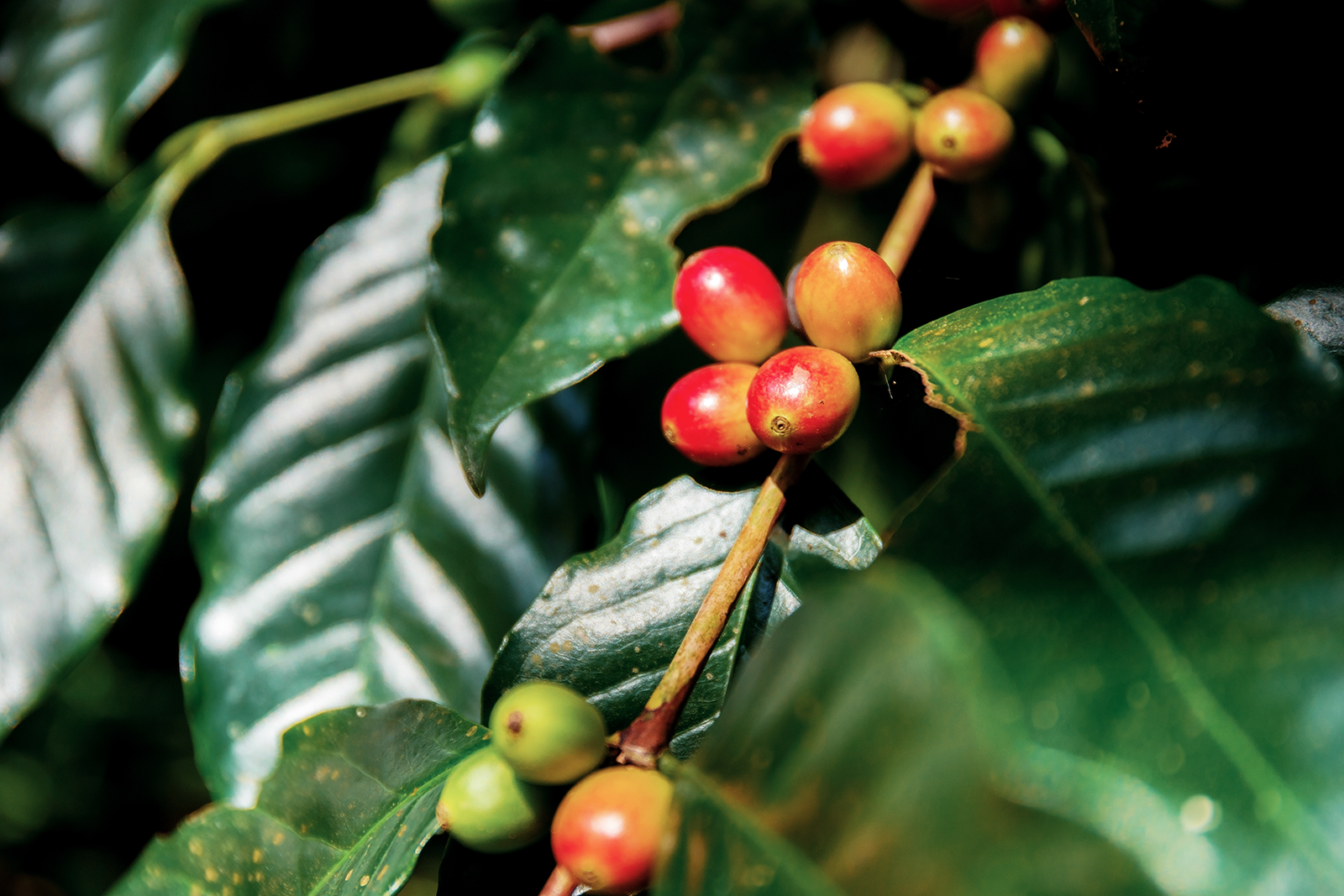

Climate change and the coffee industry
In February 2013, a Guatemalan smallholder named Mauricio Mendez watched coffee leaf rust destroy a harvest his family had protected for decades. "I never thought this would happen to me," he told Guatemala's Prensa Libre (McCook). His farm had survived the first major rust outbreak in the 1980s without serious damage. This time, the fungus reached altitudes where it had never been a threat. A neighboring farmer, Bartolo Chavajay, couldn't contain his tears. The rust had destroyed his entire harvest, his only source of income.
Warming temperatures and shifting rainfall are changing where arabica can grow and how farmers manage disease. Coffee histories and climate studies help explain those changes. Farms in Honduras and Costa Rica offer examples of the work involved in adapting.

How does climate change affect where coffee can grow?
Arabica grows across a range of elevations, with suitable conditions depending on latitude, temperature, rainfall, and the variety planted (Jaffee; McCook). Warming can make lower elevations less suitable and increase pressure on cooler upland areas. Moving uphill also depends on access to land, suitable soils, and the need to protect forests.
Coffee historian Stuart McCook describes three broad disease zones on a tropical mountainside. At cooler elevations, rust may be present without causing major losses. In warmer areas, disease pressure can make production unprofitable. Between them, farmers manage a changing balance of disease, yields, and costs. These boundaries vary with local conditions (McCook).
Warming can push conditions favorable to rust into higher elevations. McCook describes the boundaries as shifting with ecological and economic conditions. Climate models also project substantial losses of suitable coffee-growing area by 2050. A widely cited estimate is about 50%; it describes modeled climate suitability across scenarios, rather than a prediction that half of today's farms will produce nothing (Bunn et al.).
50%
approximate reduction in global area climatically suitable for coffee projected by 2050 across modeled scenarios (Bunn et al., 2015)
What is coffee leaf rust, and why is it spreading?
Coffee leaf rust is a fungal disease that damages leaves and can sharply reduce yields. Spores spread through air and rain splash. Temperature and leaf moisture affect infection. As infected plants lose leaves, they lose photosynthetic capacity, which can reduce the current harvest and growth needed for future crops (McCook).
Starting in 2007, a wave of severe outbreaks swept through Colombia, then across the Andes, Central America, and the Caribbean. McCook calls it "the Big Rust." Between 2007 and 2011, Colombia's production fell by a third. By 2012 and 2013, the epidemic had reached peak intensity across an arc from Peru to Mexico. El Salvador's production fell 57%, Mexico's 46%, Peru's 39%. Across Central America as a whole, the decline was 16% (McCook).
Changing weather helped create conditions favorable to the epidemic, alongside susceptible varieties, farm management, and economic pressures. Warmer minimum temperatures and irregular rainfall affected disease development, including at higher elevations. Several Central American countries declared emergencies (McCook; Hoffmann). Honduras sought international assistance during the outbreak ("CWS Emergency Appeal").
What other threats do coffee farms face from a changing climate?
Rising temperatures and shifting rainfall create favorable conditions for pests that were previously manageable. The coffee berry borer develops inside coffee fruit, which makes control difficult. Warmer conditions can speed its development. Shade can help manage the farm's microclimate, though its effects on pests depend on local conditions (Groenen).
Farmers also manage soil pests and root diseases. Their responses depend on the organism, soil, drainage, and available resources. Climate adaptation has to fit those local conditions.
Rainfall affects flowering and harvest timing. Rain following a dry period can trigger flowering; irregular wet and dry periods can spread flowering across several events. That leaves fruit at different stages of ripeness on the same tree and complicates picking (Hoffmann).
Key takeaway: Temperature, moisture, susceptible varieties, and farm conditions interact. Climate change can increase several pressures at once, but the combination differs from farm to farm.

What happens when coffee farming becomes unprofitable?
When coffee no longer covers its costs, farmers may leave production or change how they use their land. Jaffee documents the human cost of the early-2000s coffee price crisis: widespread job losses, hunger, and pressure on farming households. This was a price crisis, distinct from the later rust epidemic, but it shows how low incomes can leave communities less able to absorb another shock (Jaffee).
The revenue split tells the structural story. By 2001, the global coffee market had grown to nearly $80 billion in annual sales. Producer countries earned less than $6 billion. Their share had dropped from 33% in 1989 to under 8% in just over a decade (Jaffee).
Jaffee also documents the loss or conversion of more than 20,000 hectares of shade-coffee systems in El Salvador and Honduras during the price crisis. These farms can store carbon, protect soil, and provide habitat. Converting them can reduce those benefits, depending on what replaces them (Jaffee).
These pressures can reinforce one another. A farm with little income has less money for renovation or disease management. If the household converts shaded coffee land to another use, the local environment changes too. Keeping farms viable requires attention to both growing conditions and economics.
Production losses during the 2007-2013 rust epidemic
El Salvador
Mexico
Peru
Colombia (2007-2011)
Central America overall
How are producers adapting at the farm level?
Farmers are responding with specific strategies: varietal diversification, shade management, processing innovation, and biodiversity conservation. These responses require labor, money, and time before new plantings begin to produce.
Variety selection is one response. Producers can consider disease resistance alongside yield, cup quality, elevation, and management needs. Resistance varies by location and can change as disease populations evolve; a resistant variety still needs appropriate care (World Coffee Research).
At Finca San Isidro in Honduras, Katia Duke grows coffee under shade at about 1,300 meters. Her farm illustrates how coffee production and tree cover can share the same land. Shade management is one part of a farm's response to heat and growing conditions; it doesn't remove the need to manage rust (Ally Coffee, “Katia Duke”).
Aquiares Estate in Costa Rica combines coffee production with tree cover and conservation areas. It also evaluates varieties for future growing conditions. Centroamericano H1 is an F1 hybrid developed by CIRAD, CATIE, and PROMECAFE. World Coffee Research reports yields 22-47% above standard varieties in breeding evaluations, with rust resistance and cup-quality potential. Those trial results aren't a yield guarantee for every farm. Aquiares also measures its CO2 balance as part of its environmental work. Its current sustainability reporting describes shade-tree planting and research into carbon storage. Loom Coffee sources Aquiares coffees through importer Ally Coffee (Aquiares; World Coffee Research).
Shade can buffer temperature extremes and provide habitat for birds and insects. Its effects on moisture, disease, yields, and cup quality depend on the site and how the canopy is managed. Farmers have to balance those effects with their production needs (McCook).
Plant spacing and intercropping also depend on the farm. Other crops can provide food or additional income, while spacing and pruning affect airflow and access for management. These decisions have costs and tradeoffs; coffee is a perennial crop, so annual crop rotation isn't a direct substitute for managing an established coffee field.
Monoculture under pressure
A single susceptible variety can expose a farm to concentrated disease risk. Full-sun production offers less shade to buffer heat. A household relying on coffee alone also has fewer income sources when prices or yields fall.
Diversified adaptation
A mix of suitable varieties can spread risk. Managed shade can buffer heat and support habitat. Additional crops may provide food or income. Processing systems can reduce water use when designed for that purpose; a sealed fermentation tank alone doesn't establish water savings.

What does this mean for your cup of coffee?
The coffees you enjoy depend on specific climate conditions at specific altitudes, and the cost of protecting those conditions flows through the entire supply chain. A farm's elevation matters through its relationship with local temperature and other growing conditions. Variety, harvest, processing, and roasting also shape the cup. As suitable climates shift, maintaining quality and production becomes a different task for each farm.
Adaptation can involve new seedlings, shade planting, disease management, and changes to processing or water use. These investments compete with a household's immediate expenses. Reliable income makes longer-term planning more possible.
The price paid for green coffee and the reliability of purchasing relationships affect what farmers can invest. To judge a sourcing claim, look for the named producer, how the buying relationship works, and evidence of the practice being described. A higher retail price alone doesn't show how much reached the farm.
When you read about a farm's climate work, ask what changed, who paid for it, and how the results were measured. Those details help distinguish a documented response from a broad sustainability claim.
Works Cited
"CWS Emergency Appeal: Coffee Rust Plague (Honduras)." ReliefWeb, 6 Nov. 2013, https://reliefweb.int/report/honduras/cws-emergency-appeal-coffee-rust-plague-honduras.
Bunn, Christian, et al. "A Bitter Cup: Climate Change Profile of Global Production of Arabica and Robusta Coffee." Climatic Change, vol. 129, 2015, pp. 89-101. doi:10.1007/s10584-014-1306-x.
Groenen, D. "The Effects of Climate Change on the Pests and Diseases of Coffee Crops in Mesoamerica." Journal of Climatology & Weather Forecasting, vol. 6, no. 3, 2018. doi.org/10.4172/2332-2594.1000239.
Hoffmann, James. The World Atlas of Coffee. 2nd ed., Bloomsbury, 2018.
Jaffee, Daniel. Brewing Justice: Fair Trade Coffee, Sustainability, and Survival. University of California Press, 2007.
McCook, Stuart. Coffee Is Not Forever: A Global History of the Coffee Leaf Rust. Ohio University Press, 2019.
Additional Works Cited
Bunn, Christian, et al. “A Bitter Cup: Climate Change Profile of Global Production of Arabica and Robusta Coffee.” Climatic Change, vol. 129, 2015, pp. 89-101. WCR explanation of suitability research. Read source.
World Coffee Research. “Centroamericano.” Arabica Varieties Catalog. Accessed 29 Oct. 2026. Read source.
World Coffee Research. “Coffee Leaf Rust Knows No Borders, Neither Does Coffee Science.” 2025. Accessed 29 Oct. 2026. Read source.
Aquiares. “Sustainability.” Accessed 29 Oct. 2026. Read source.
Ally Coffee. “Katia Duke, San Isidro, Catuai, Washed.” Accessed 29 Oct. 2026. Read source.
Climate models project substantial losses of land climatically suitable for coffee by 2050; a widely cited estimate is about 50% across modeled scenarios. That concerns climate suitability, rather than a prediction that half of today's coffee farms will produce nothing. Local conditions and adaptation affect the outcome.
Coffee leaf rust is a fungal disease that damages leaves and reduces a coffee plant's capacity to support fruit and future growth. Temperature and moisture affect infection, while susceptible varieties, farm management, and economic constraints also influence losses. Recent epidemics can't be explained by a single cause.
Coffee farmers use suitable varieties, shade management, renovation, and other locally appropriate responses. At Aquiares in Costa Rica, variety evaluation is part of that work. World Coffee Research reports Centroamericano H1 yields 22-47% above standard varieties in breeding evaluations; that is a trial result, not a guarantee on every farm.
Climate affects coffee through temperature, rainfall, plant health, flowering, and ripening. Those conditions interact with variety, harvest, processing, and roasting, so altitude alone doesn't determine brightness or quality. Irregular flowering can also complicate harvesting ripe fruit.
Converting shaded coffee land can reduce carbon storage, soil protection, and habitat, depending on what replaces it. Daniel Jaffee documents more than 20,000 hectares of coffee land converted or abandoned in El Salvador and Honduras during the early-2000s price crisis. Those historical losses shouldn't be presented as a current global total or attributed entirely to climate change.
Farmers need income to invest in seedlings, disease management, shade, water systems, and other adaptations. Green-coffee prices and reliable buying relationships affect that capacity. A higher retail bag price alone doesn't show how much reached the producer or which investments it funded.