Your Cart is Empty

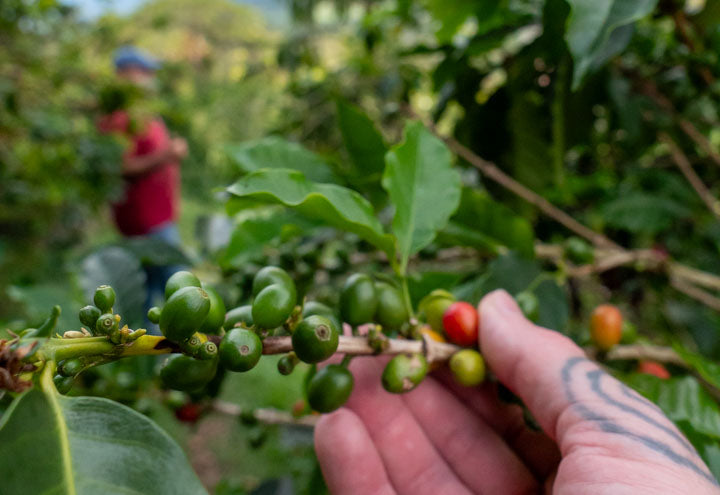

The road to Aquiares:
a visit to Turrialba, Costa Rica
Published July 3, 2023
This summer, I traveled to Costa Rica to spend a week at Aquiares Estate in Turrialba.
Long-time members will recognize the name. Summer 2023 marks the third consecutive year we've carried Aquiares' coffees, working with Ally Coffee Importers to bring the Centroamericano Anaerobic Natural and the Esperanza Red Honey to our menu each year.
In June I spent several days on the farm with manager Diego Robelo. I wanted to see how the coffees we'd been buying were grown, processed, and evaluated.
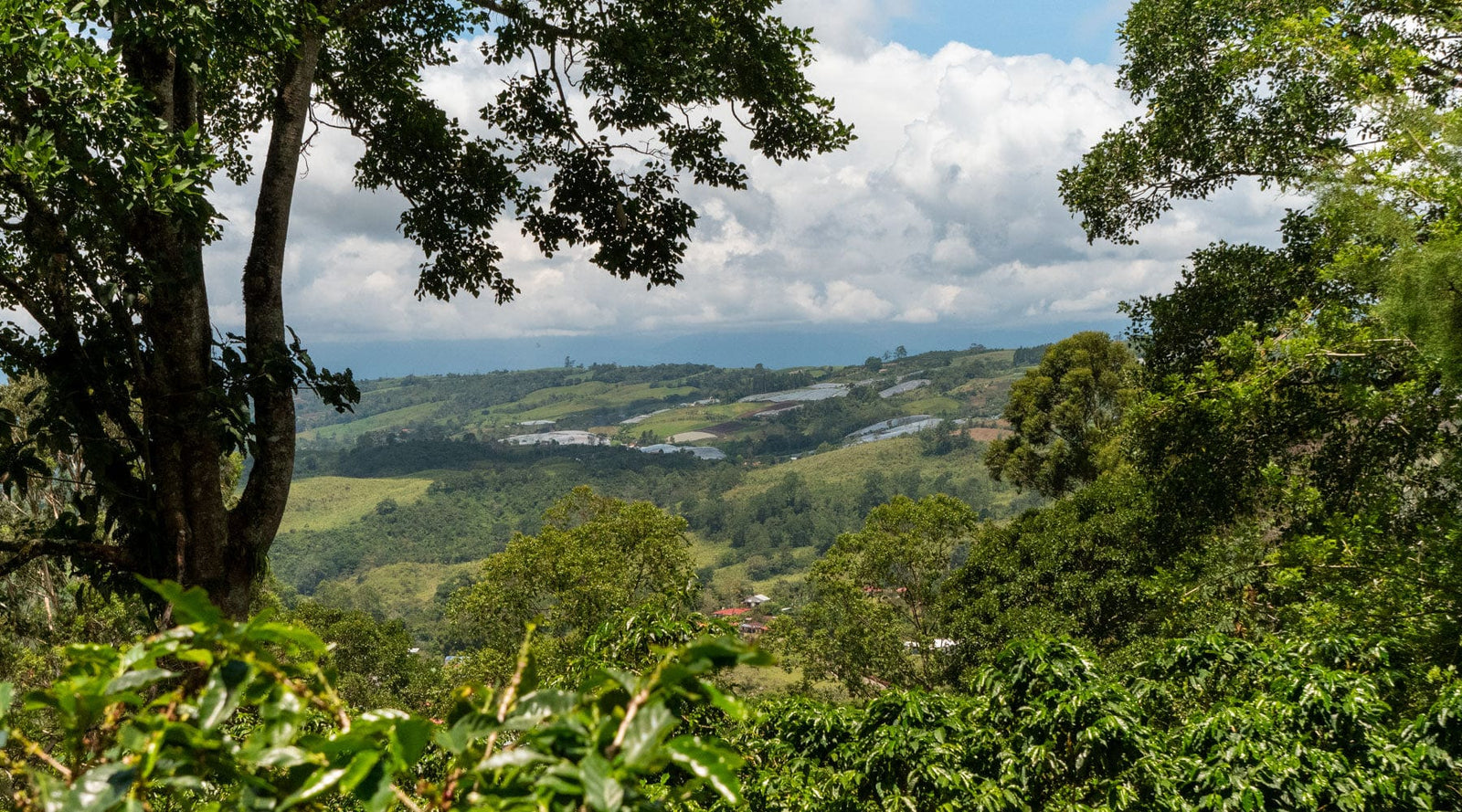
The Road to Aquiares
Driving toward Turrialba, the landscape opens up.
Mountain peaks sit behind low clouds. Pastureland, forest, and coffee plots stretch across the valley.
The town of Aquiares sits at 1,100 to 1,400 meters on the slopes of the Turrialba volcano. The streets are narrow and active. Houses are painted in pastels. Coffee runs through everyday conversation, because over 1,800 people live in this community and the farm's rhythm sets the calendar.
The estate is also a community. During the visit, I learned more about the housing and education work Alfonso Robelo began in the early 1990s.
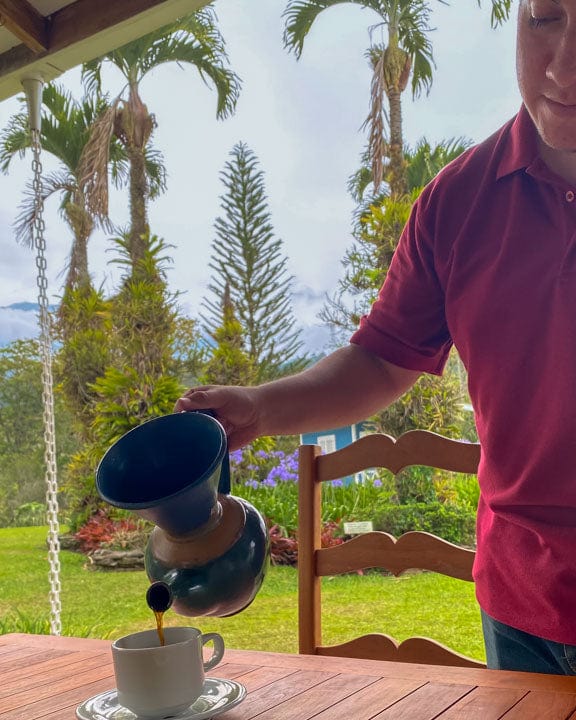
Aquiares resident, Jorge Núñez Jara pours coffee from the Vandola at Hacienda Esperanza.
Jorge and Katheryn run hospitality at Hacienda Esperanza. They greeted us with coffee made on a Vandola, a ceramic pour-over brewer developed in Costa Rica. After Jorge walked me through the brew, we sat on the patio with the coffee and a loaf of his banana bread, looking out over the fields, the mill, and the small Catholic church at the center of town.
Later, Wilman, who runs Aquiares' agritourism program, gave me the operational tour. He talked through their pruning cycle and their integrated pest management. I come from a horticulture and agriculture background, so this was familiar ground.
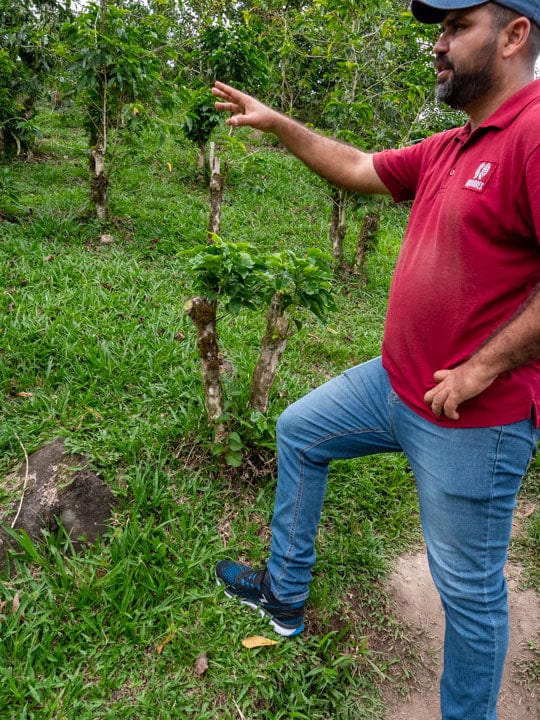
Wilman elaborated on several new projects at Aquiares, including cacao production and an initiative spearheaded by the women of Aquiares to begin producing essential oils.
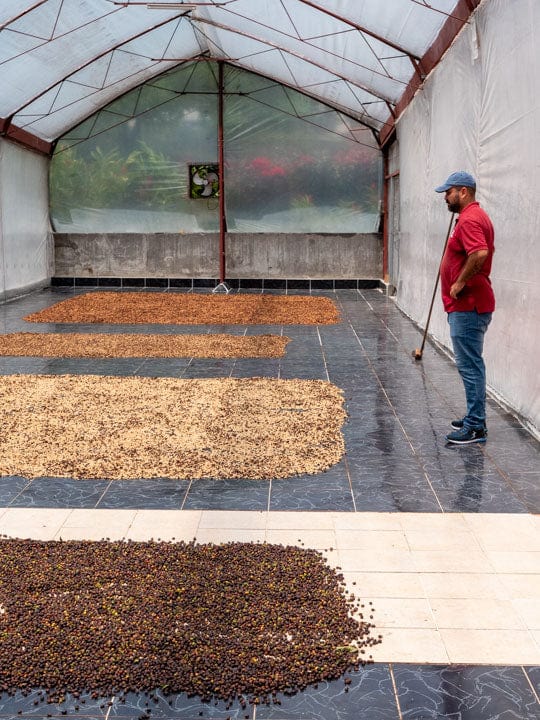
Specialty microlots at Aquiares Estate are carefully monitored while drying in the greenhouses.
Diego Robelo manages Aquiares' day-to-day operation. He talked us through rootstock selection and fermentation profiles, explaining how those decisions fit the farm's longer-term plans.
Diego is the son of Alfonso Robelo, who took over farm management in the early 1990s. Alfonso, a political refugee from Nicaragua, worked to expand home ownership and education in the community. Learning about that history helped me understand the relationship between the estate and the people who work there.
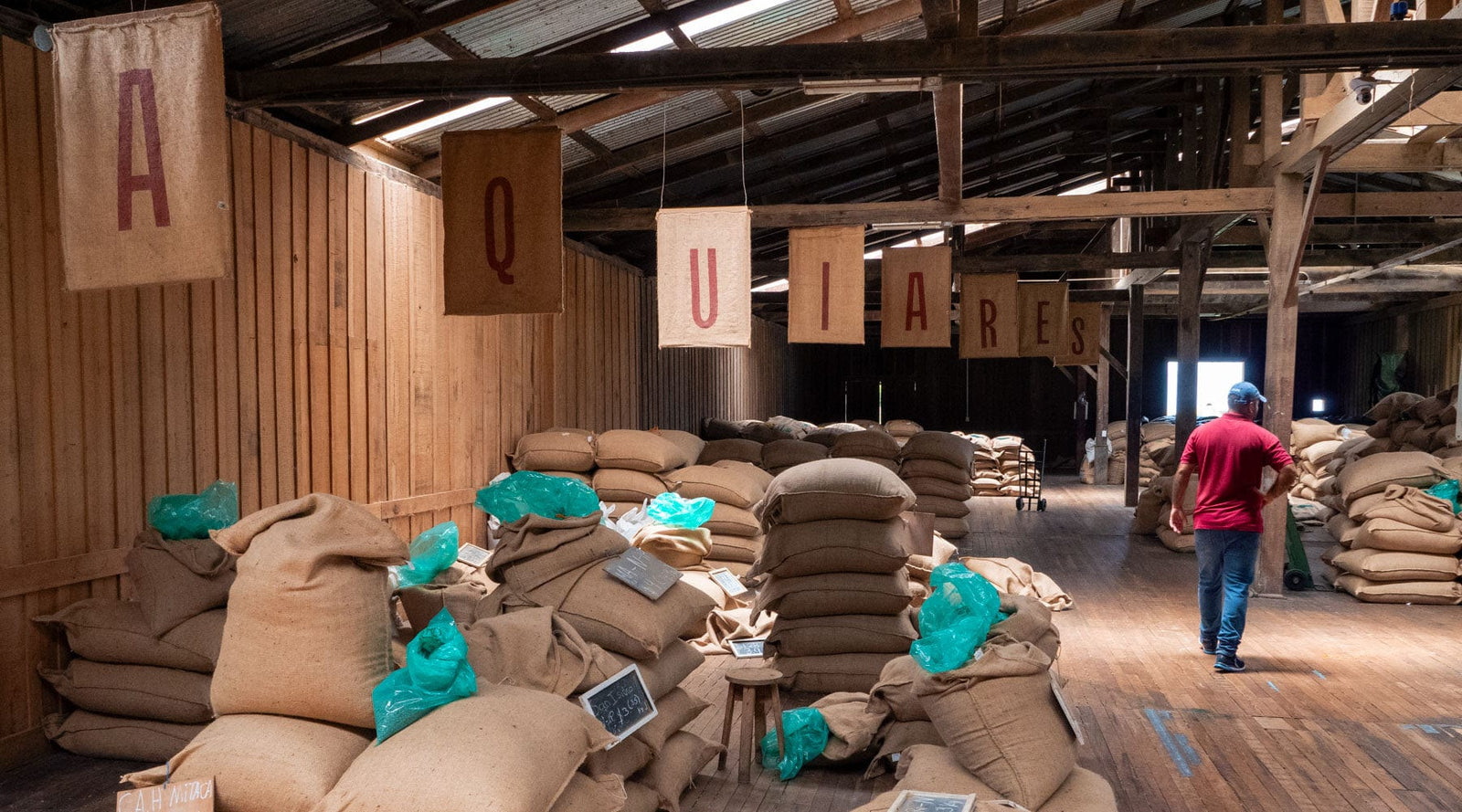
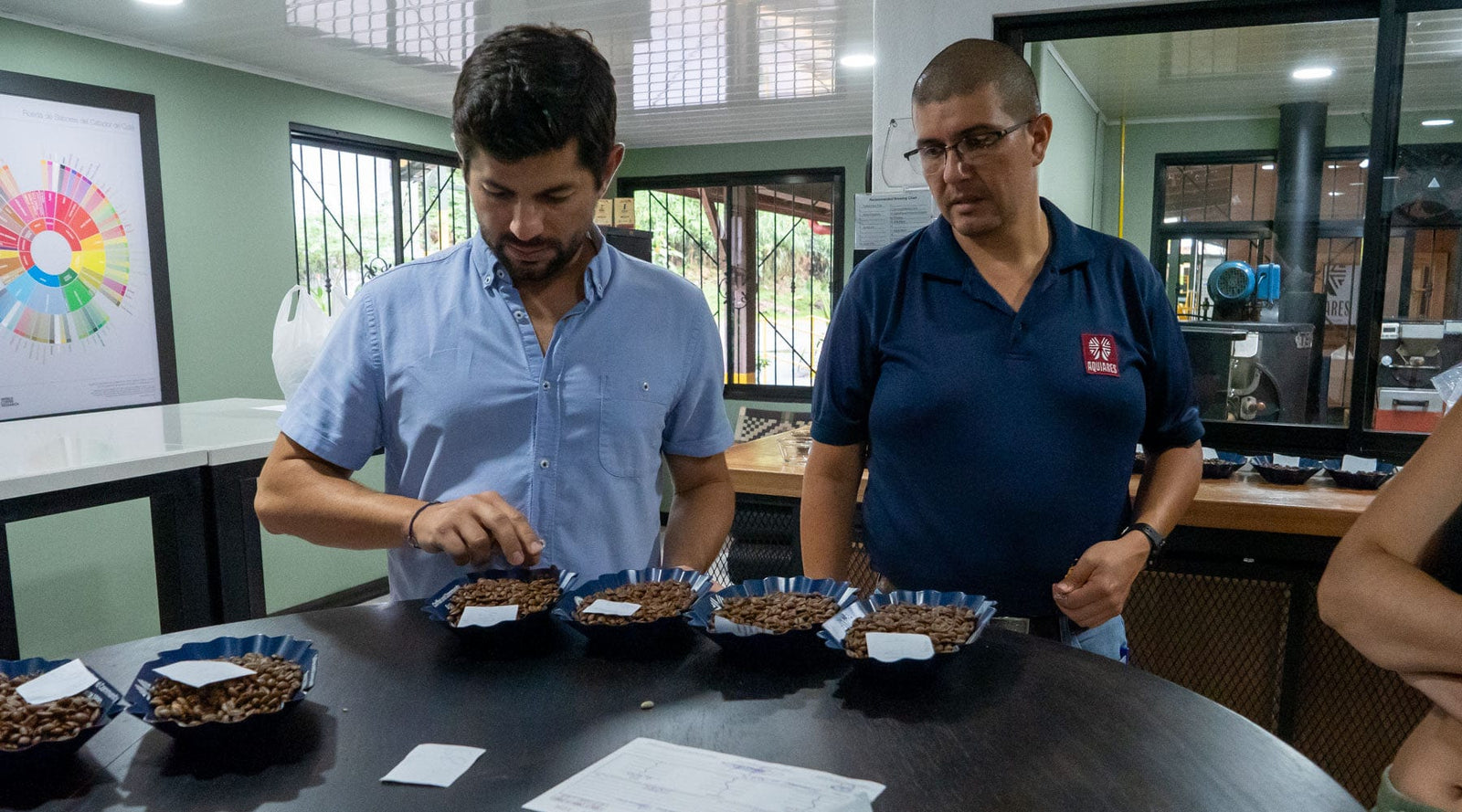
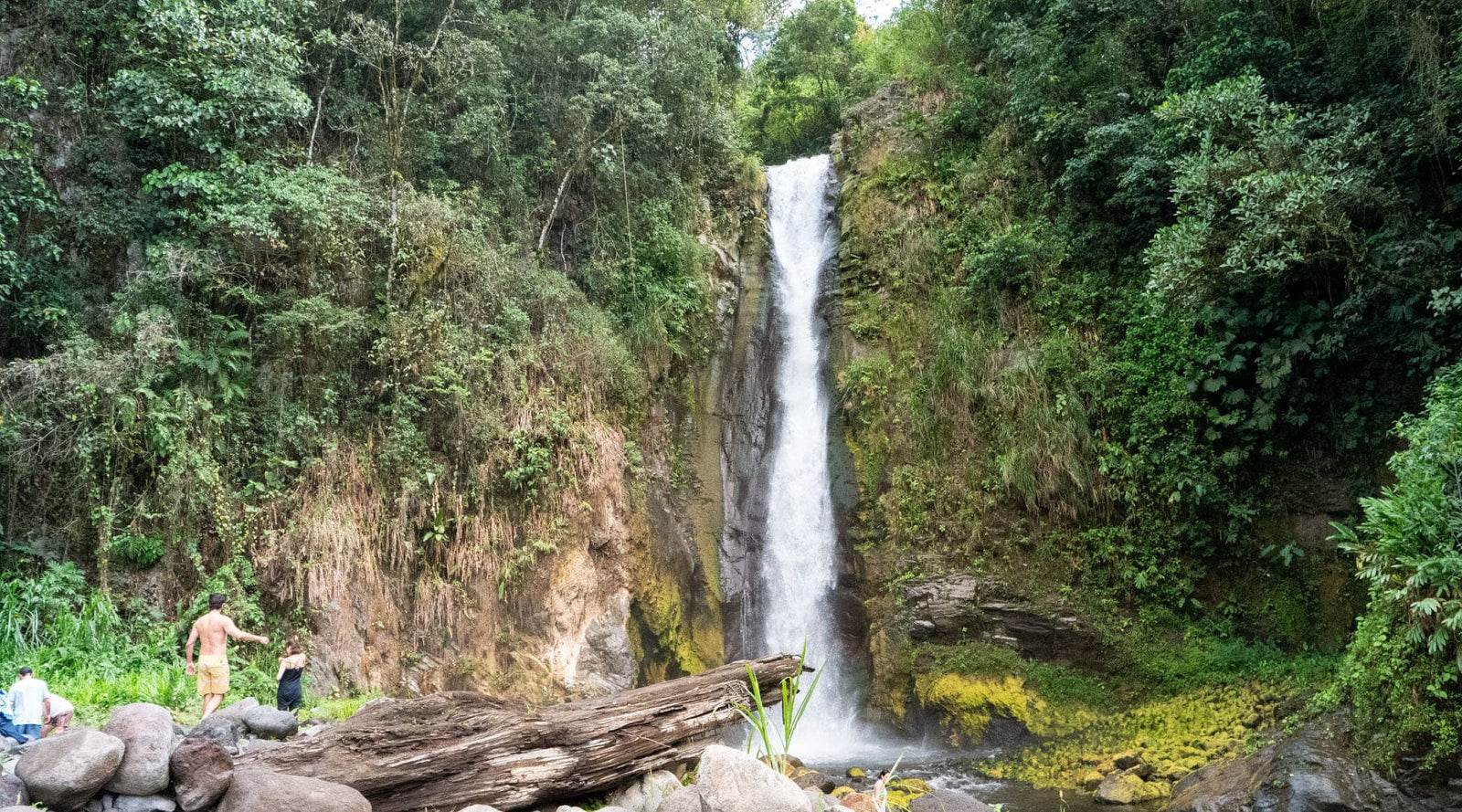
Diego had invited me to a cupping session at the Aquiares quality control lab that afternoon, along with my traveling companions from California and Michaela Tomchek, a traceability specialist from Mercanta Coffee Importers who was visiting the farm. Before the cupping, he had one errand to run. He wanted to show us the Catarata de Aquiares, a 132-foot waterfall about an hour's hike from the Hacienda.
The trail winds through coffee plots and forest, descending toward the river. The sound of the falls picks up first; then the canopy opens and the waterfall is right in front of you.
We climbed onto the mossy rocks at the edge of the pool. Diego went straight into the water, swam under the falls, and let the column of water pull him beneath the surface. He came up grinning.
The scene reminded me of playing in the creeks and forests of rural North Carolina as a kid. There's something about going back to running water that resets the rest of the day.
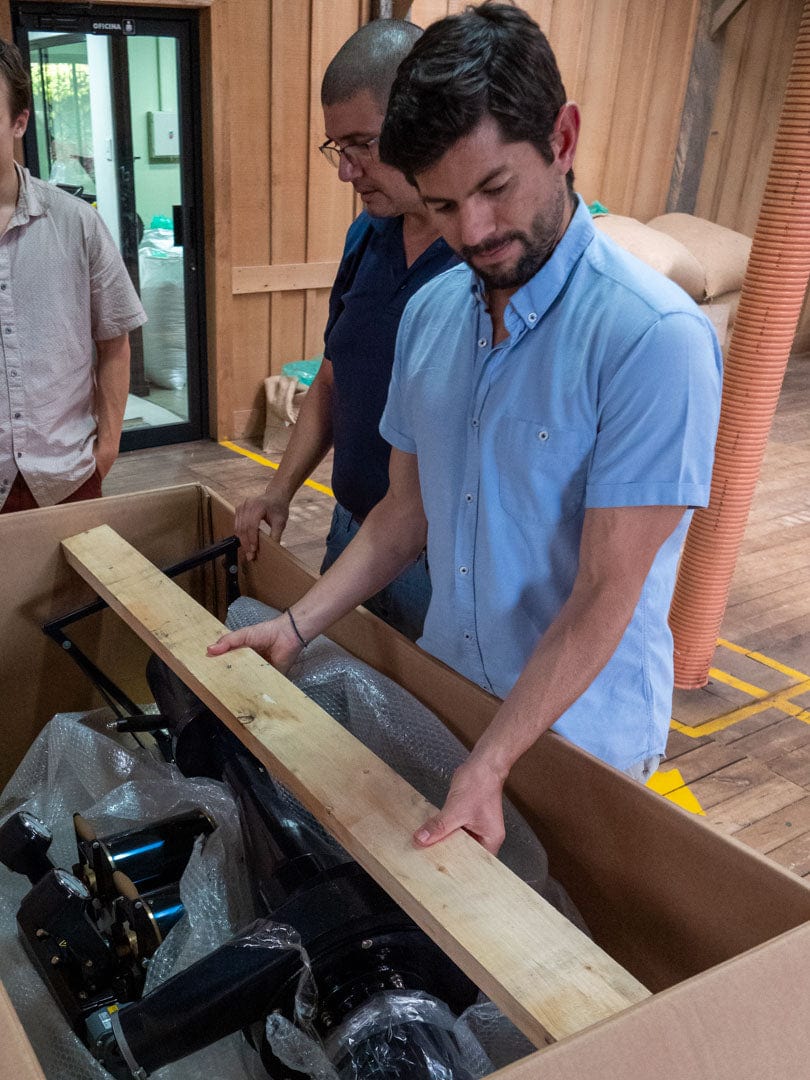
Back at the Hacienda, we rested briefly and then headed to the lab. The mill had another detour waiting. A new Probat sample roaster had just arrived. Diego and Armando, the mill manager, were already uncrating the double-barrel machine, blue steel and brass, before we caught up with them.
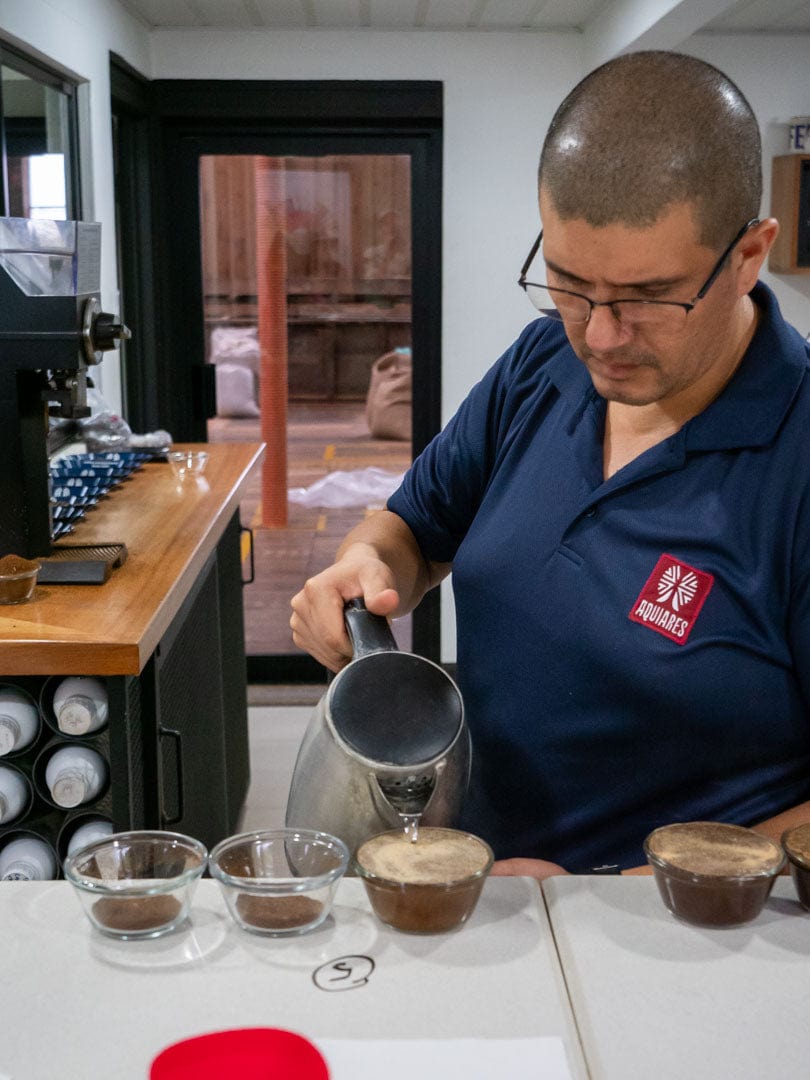
Michaela and I helped set the cupping table, weighing out doses of twelve Aquiares lots. Armando worked his way around with hot water and set a four-minute timer. This was a blind cupping, so we didn't know the variety or process behind each bowl going in.
Several of the coffees were impressive, but two of them landed clearly above the rest on flavor, complexity, sweetness, and overall structure. After we compared notes, Diego told us they were the same variety: Mariana. Mariana is relatively new at Aquiares. It's an F1 hybrid developed for Central American growing conditions, selected for rust resistance, vigorous growth, and cup quality.
On the cupping table, the honey-processed Mariana leaned toward dark fruit and molasses. The team picked up plum, cherry, and guava, with brown-sugar sweetness underneath. The natural carried a similar weight with brighter tropical sweetness on top: melon, cantaloupe, papaya, and caramel. Across both lots, the acid and the sweetness moved together. The mouthfeel was juicy and clean, finishing crisp.
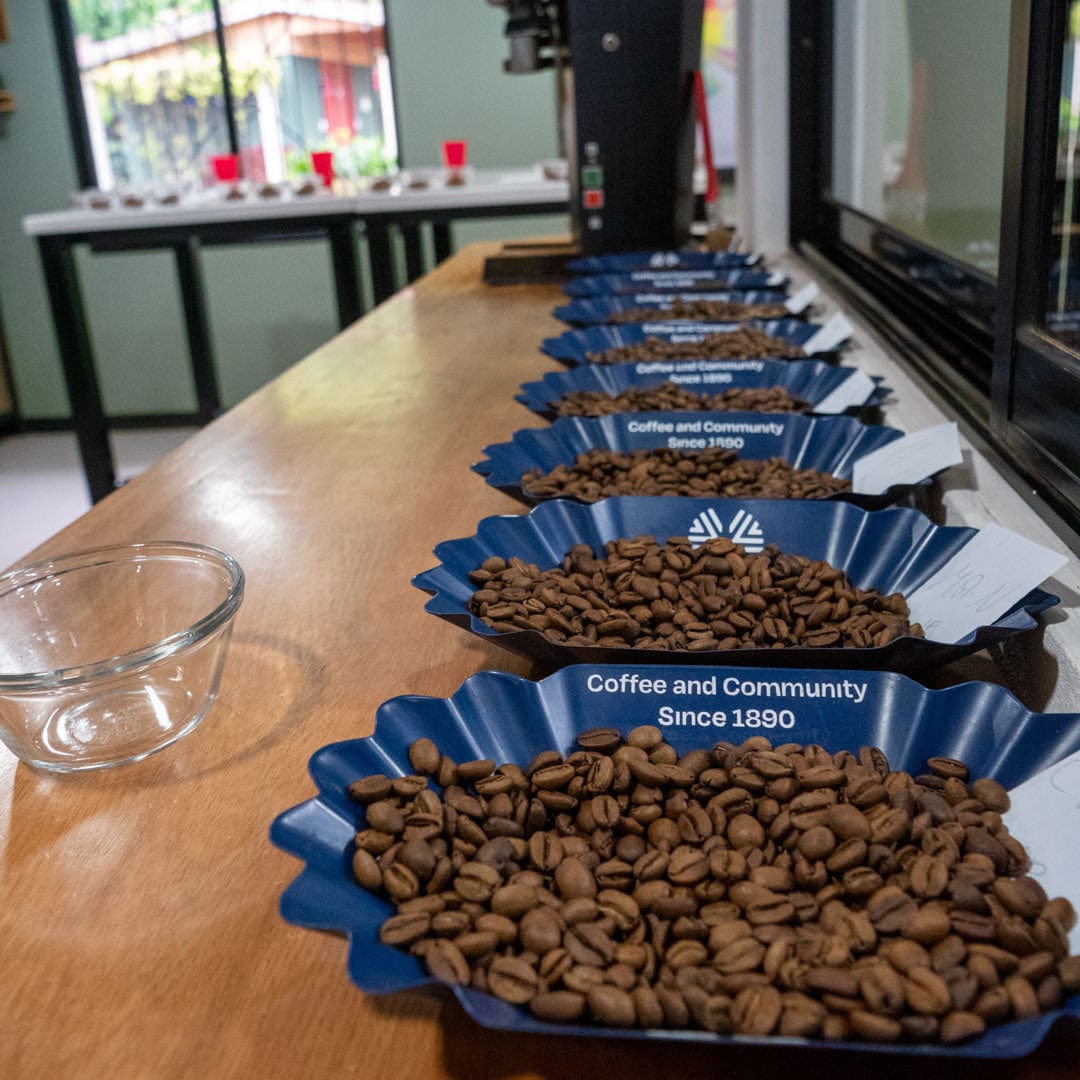
After the cupping, I talked with Diego about bringing a small lot of Mariana to our menu. I left with as much Mariana Natural as would fit in my carry-on.
Seeing the drying rooms, mill, and cupping lab gave me a clearer view of the work behind these lots. At the table, we could compare how different varieties and processes tasted before we knew their names.
If you've been with us a while, you'll recognize two other Aquiares lots: the Centroamericano Anaerobic Natural and the Esperanza Red Honey. In summer 2023, that year's crop arrived in the US through Ally Coffee. Those recurring purchases had brought us back to Aquiares for a third year.
If you have the chance to compare two Aquiares lots, brew them side by side. That afternoon's honey and natural Mariana cups gave us plenty to discuss, even before Diego revealed what was in the bowls.
Source
Pierce, Christopher. Firsthand account of a June 2023 visit to Aquiares Estate. Loom Coffee Co., 3 July 2023.
Aquiares Estate is in Turrialba, Costa Rica, on the slopes of the Turrialba volcano. Christopher Pierce visited in June 2023 and described the estate, its community, processing work, and cupping lab. The travelogue records that visit rather than serving as a current census of the farm.
Mariana is described in the 2023 Aquiares visit as an F1 hybrid selected for Central American conditions, disease resistance, and cup quality. During a blind cupping, the honey and natural Mariana lots stood out to the visiting group. The fruit and sweetness descriptions record that tasting; they don't promise the same result in every harvest.
Diego Robelo managed Aquiares Estate during Christopher Pierce's June 2023 visit. In the travelogue, he discusses farm management, processing, and the coffees evaluated in the lab. His father, Alfonso Robelo, had begun work on community housing and education after taking over management in the early 1990s.
The Aquiares travelogue discusses honey and natural lots, along with Centroamericano Anaerobic Natural and Esperanza Red Honey coffees carried by Loom Coffee Co. Christopher's group tasted twelve lots during that visit. The number describes one cupping, not a fixed size for every Aquiares quality-control session.
Loom Coffee Co. works with importer Ally Coffee for Aquiares lots. In summer 2023, when this travelogue was written, we'd carried Aquiares coffees for three consecutive years. Christopher Pierce's June 2023 visit added firsthand context to that sourcing relationship.