Your Cart is Empty


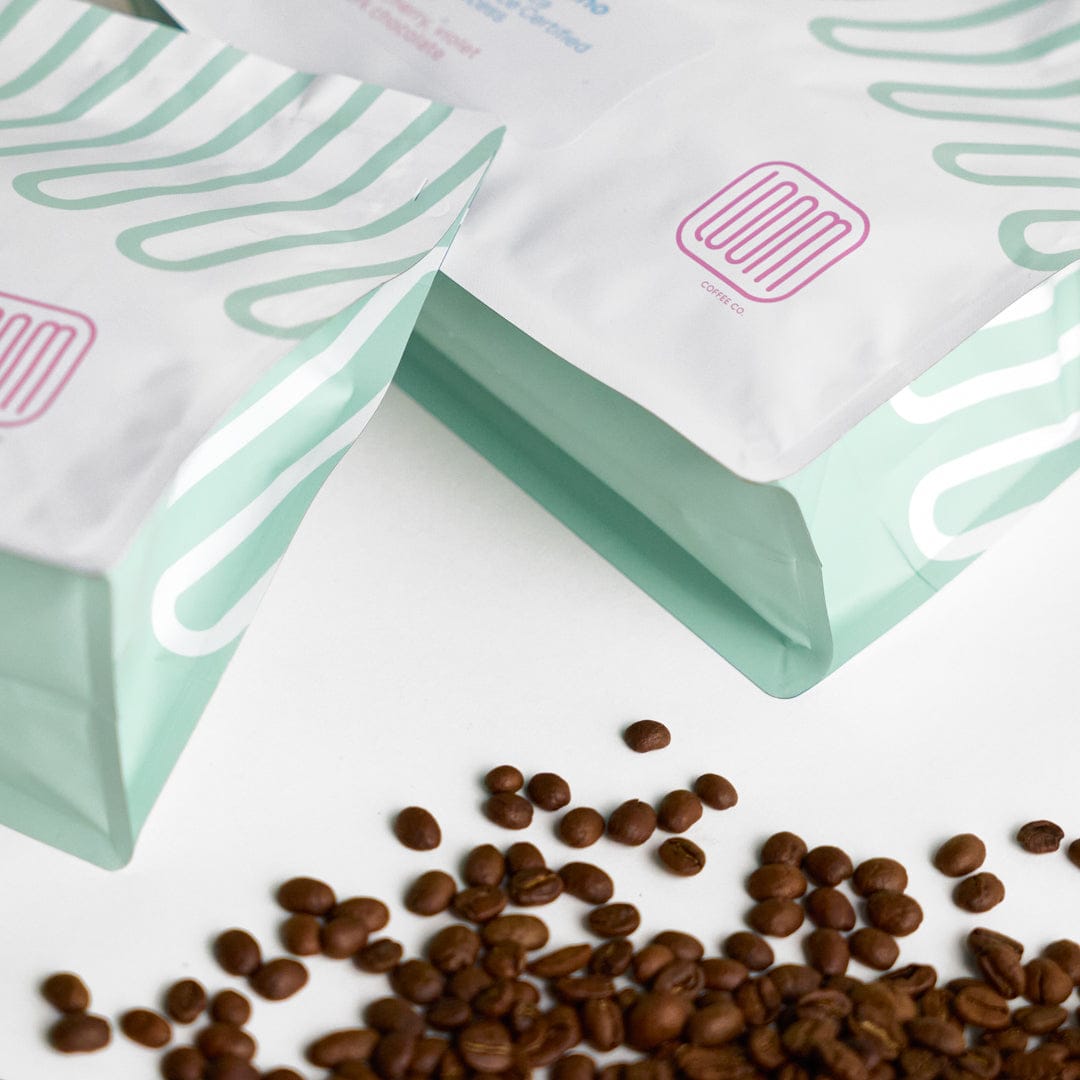
Edwin Noreña Peach Carbonic Honey
Peach gummies, fuji apple and grapefruit juice
Past offering
This coffee is no longer on our menu.
Brew companion
Brew this coffee
Choose your method and we’ll guide the timing, one step at a time.
Expression
Tasting Notes
Peach gummies, fuji apple and grapefruit juice
Acidity
Mellow Bright
Sweetness
Subtle Pronounced
Body
Light Full
Origin
Country
Colombia
Region
Quindío
Producer
Edwin Noreña
Farm
Finca Campo Hermoso
Craft
Variety
Caturra
Process
Carbonic Honey, Peach Co-Ferment
Fermentation
Two-stage anaerobic co-fermentation with dried peach mossto and brewer's yeast, 24-hour primary + 72-hour secondary, black honey drying
Elevation
1650 meters
Roast Level
Lighter Darker
Expression
Origin
Craft
Tasting Notes
Peach gummies, fuji apple and grapefruit juice
Acidity
Mellow Bright
Sweetness
Subtle Pronounced
Body
Light Full
Country
Colombia
Region
Quindío
Producer
Edwin Noreña
Farm
Finca Campo Hermoso
Variety
Caturra
Process
Carbonic Honey, Peach Co-Ferment
Fermentation
Two-stage anaerobic co-fermentation with dried peach mossto and brewer's yeast, 24-hour primary + 72-hour secondary, black honey drying
Elevation
1650 meters
Roast Level
Lighter Darker


The peach is real
The fruit comes through immediately and carries all the way to the finish. Two-stage carbonic fermentation with dried peach and brewer's yeast has pushed flavor deep into every layer of this coffee. The cup is sweet, creamy-bodied, and bright with grapefruit acidity.
This is probably the most technically ambitious lot we've carried. It scored 94 points in a blind Coffee Review assessment, a score earned without the reviewer knowing anything about the processing method, the producer, or the price.
If you're curious how far coffee processing can push flavor, there's nothing like this in our regular lineup.

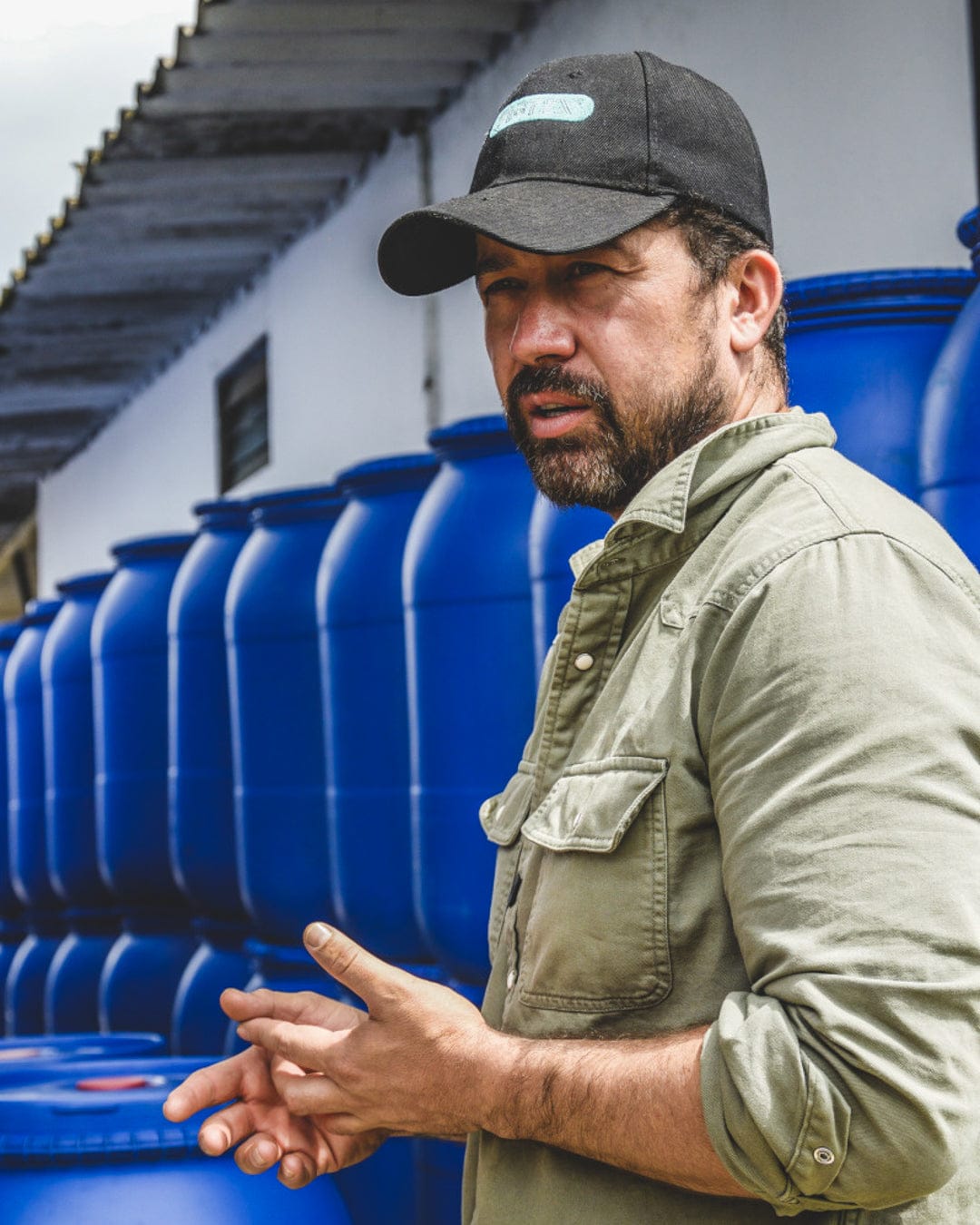



The agroindustrial engineer who became The Alchemist
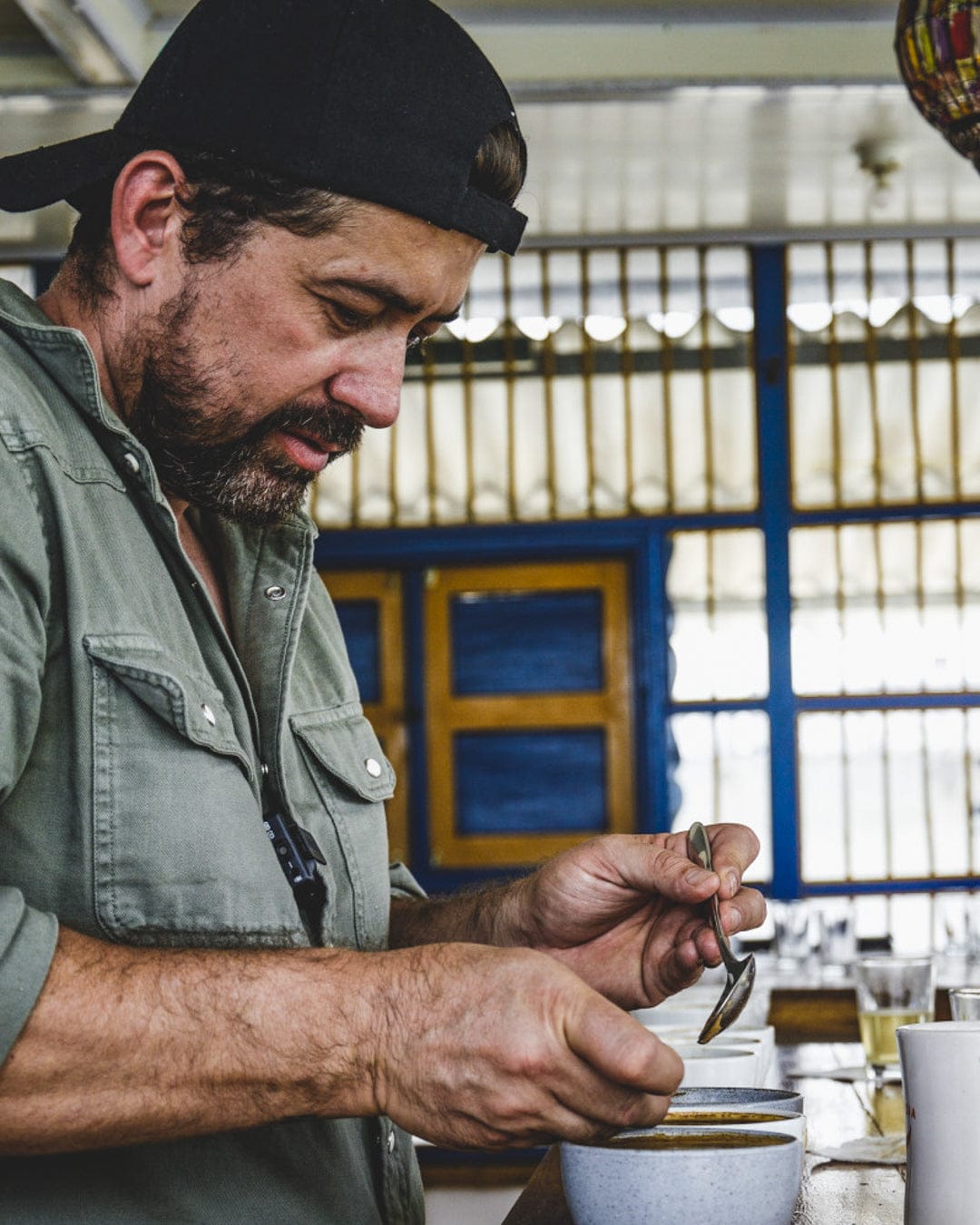
Edwin Noreña inherited Finca Campo Hermoso from his father in Circasia, a municipality in Colombia's Quindío department at roughly 1,650 meters elevation. He holds a degree in agroindustrial engineering with graduate-level biotechnology studies, and he's certified as a Q Grader, Q Processor, and Cup of Excellence judge. After years consulting on processing across Colombia, Edwin returned to his own farm in 2021.
The farm now operates as a fermentation research center in partnership with the Santuario Project, with a dedicated R&D facility built in Armenia in 2023. Edwin grows over a dozen cultivars - Gesha, Bourbon Sidra, Sudan Rume, Wush Wush - but chose Caturra for this lot. Colombia's classic workhorse variety. All the complexity here comes from the fermentation, not the plant genetics.
His coffees trade under the El Alquimista brand, but Royal Coffee's tasting team described Edwin himself as "down to earth" and "unconcerned" by the industry buzz around him.




How the peach mossto process actually works
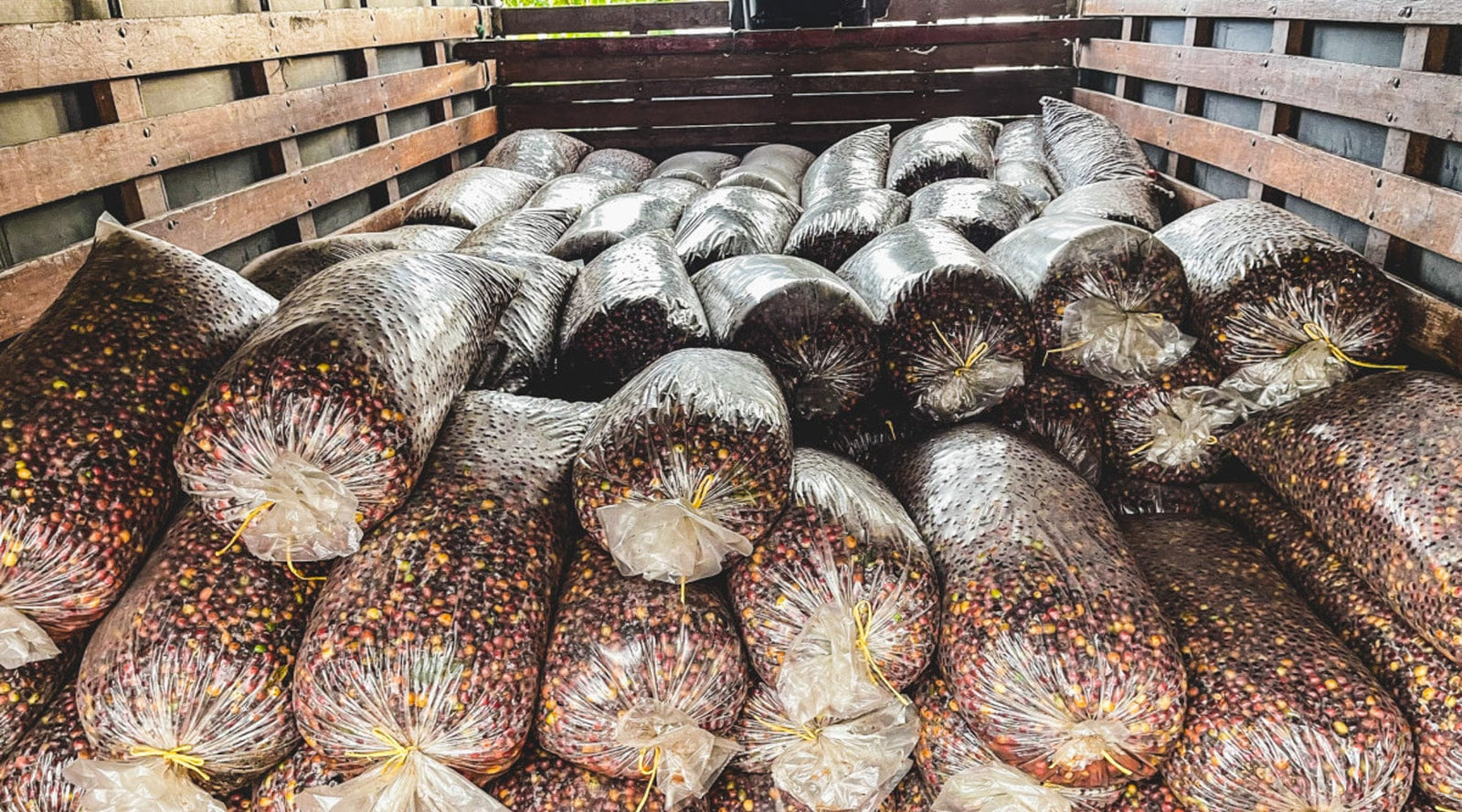
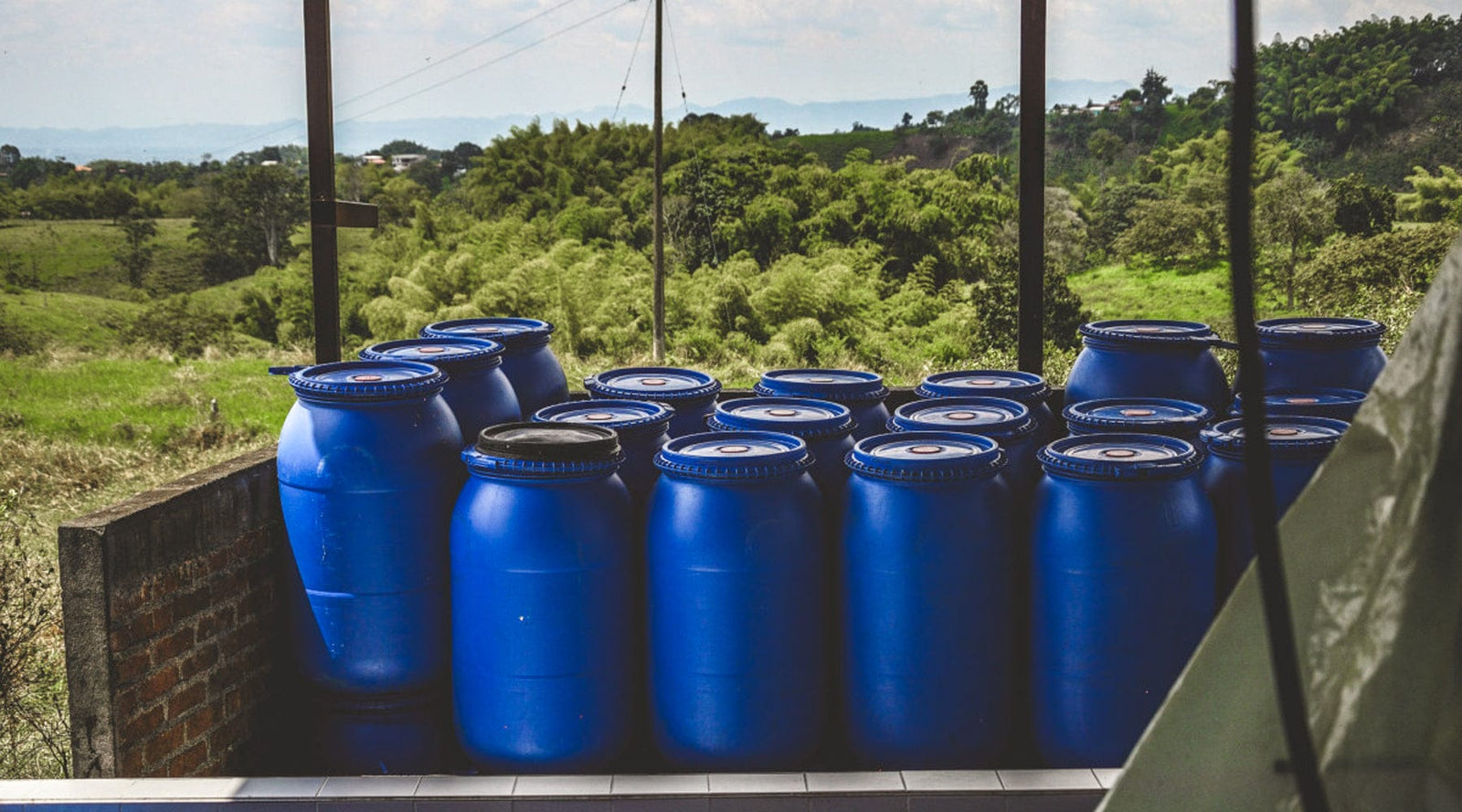
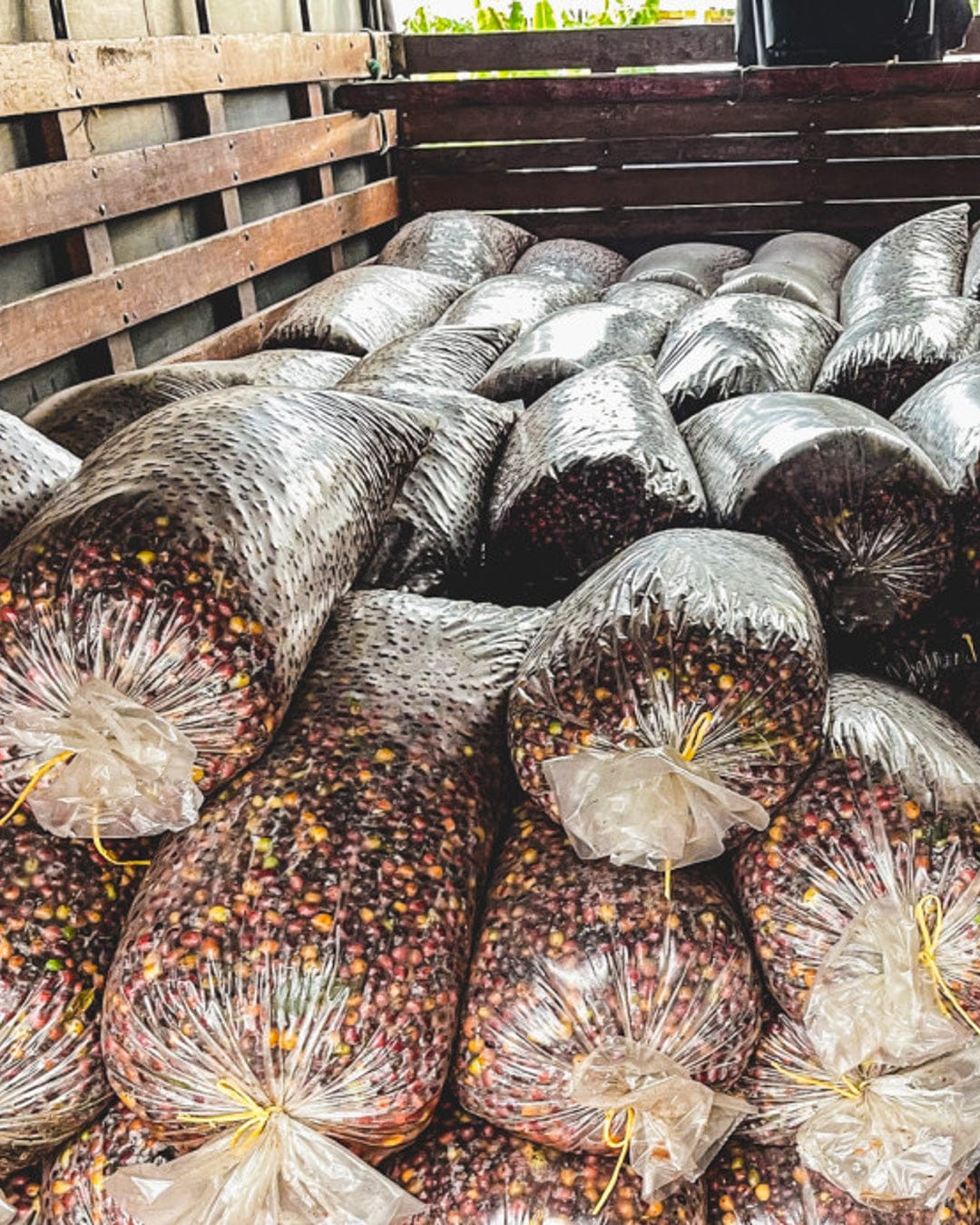
The process runs in two stages. First, hand-sorted cherries ferment anaerobically for 24 hours in 2,000-kilogram tanks, producing a concentrated sugary byproduct called mossto, a term borrowed from winemaking. That mossto is then fermented independently with brewer's yeast and dried peach fruit before being reintroduced to the coffee at exactly 10 milliliters per kilogram of cherry.
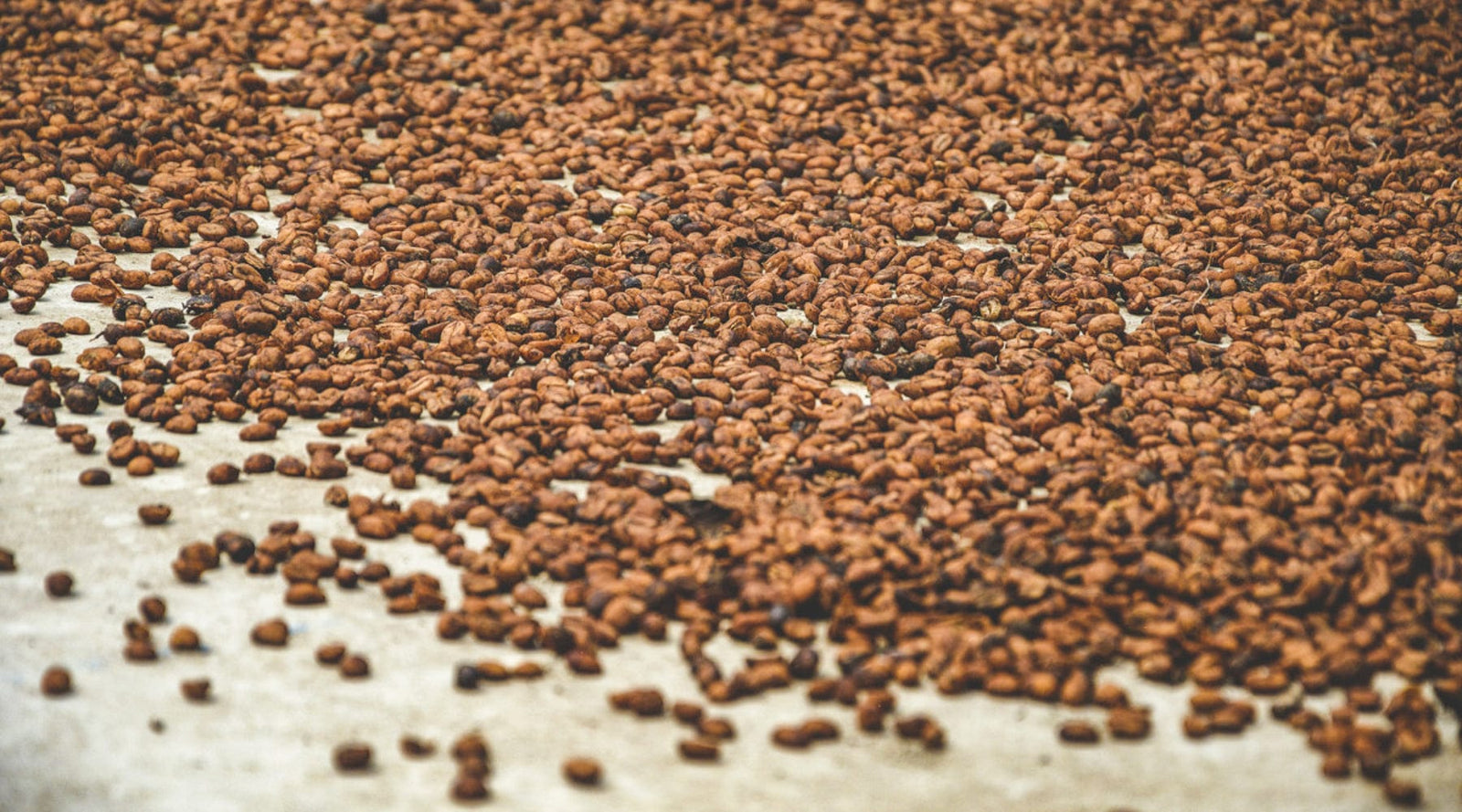
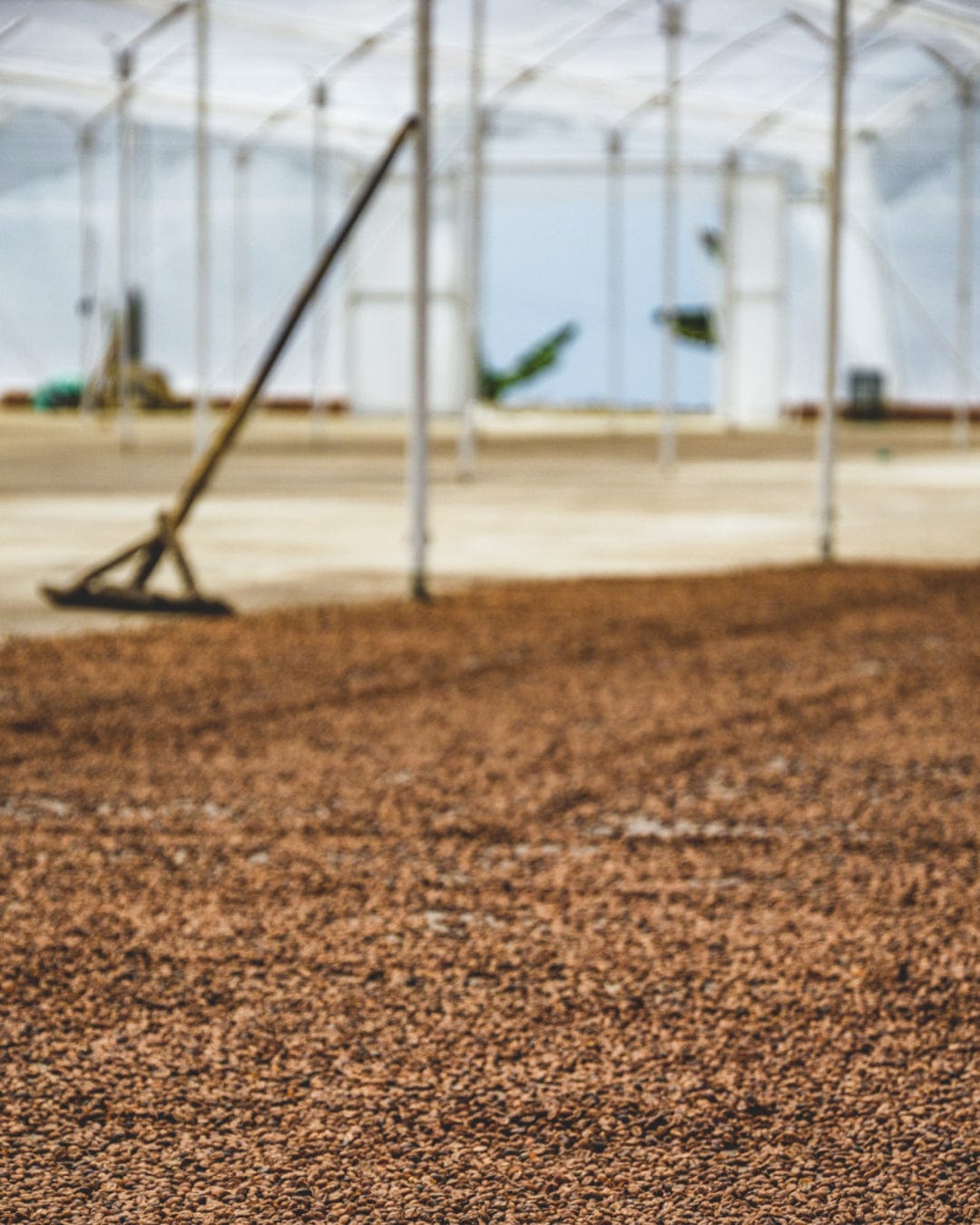
The second fermentation runs 72 hours in sealed 200-kilogram tanks. After depulping, the coffee retains most of its mucilage, comparable to a black honey process, and dries on raised beds in Edwin's greenhouse for 10 days, followed by 8 days of conditioning.
Edwin monitors pH and temperature throughout. Controlled fermentation with an engineer running the numbers, despite what the "Alchemist" brand name might suggest.
Brewing Guides
Brew Edwin Noreña Peach Carbonic Honey like we do - here’s how.
Highlights clarity and acidity; best with precise grind, flow control, and flat or conical brewers.
| Brew Ratio | 1:14 (e.g., 20g coffee to 280g water) |
| Grind | Medium-fine (like sand) |
| Water Temp | 92°C / 198°F |
| Total Brew Time | 2:30 – 3:00 min |
| Yield | 270–290g |
Use a V60 with slow, centered pours. Lower temperature preserves the delicate peach and jasmine aromatics from the co-fermentation process.
Full immersion with coarse grind; great for body, sweetness, and lower-acidity profiles.
| Brew Ratio | 1:14 (e.g., 30g coffee to 420g water) |
| Grind | Coarse (like sea salt) |
| Water Temp | 92°C / 198°F |
| Total Brew Time | 4:00 – 4:30 min |
| Yield | 380–420g |
Gentle stir at the start. Immersion brings out the creamy body and candy sweetness while the coarser grind keeps the cup from getting heavy.
Pressure extraction with fine grind; isolates intensity, structure, and balance.
| Brew Ratio | 1:2 (e.g., 17g coffee to 34g espresso) |
| Grind | Fine (like powdered sugar) |
| Water Temp | 92°C / 198°F |
| Total Brew Time | 28 – 32 sec |
| Yield | 32–36g |
Keep the dose low (under 18g) to avoid bitterness. Emphasizes peach sweetness and jasmine florals with a creamy, rounded finish.

Try coffees like this one, on your schedule.
The Rotation is your coffee membership. Every order is a different single-origin, roasted to order and shipped within 48 hours. Explore our full lineup and find you next favorite.
You set the schedule, adjust or cancel anytime.
Carbonic maceration seals whole coffee cherries in an oxygen-deprived tank, triggering intracellular fermentation inside each cherry. The technique is borrowed from winemaking, specifically Beaujolais production. The first stage here ferments whole cherries for 24 hours in 2,000-kilogram tanks, producing a concentrated sugary runoff called mossto that becomes the vehicle for the second fermentation stage.
Co-fermentation introduces a secondary agent into the fermentation environment to shape the coffee's chemistry through diffusion. Here, the mossto from the first carbonic maceration is fermented separately with brewer's yeast and dried peach fruit, then reintroduced at 10 milliliters per kilogram of cherry for 72 more hours in sealed tanks. After depulping, the coffee dries as a black honey on raised beds for 10 days.
Caturra is a natural mutation of Bourbon first discovered in Brazil, prized for its compact growth habit that allows denser planting. It was Colombia's dominant cultivar before leaf rust outbreaks prompted mass replacement with rust-resistant Castillo. Choosing Caturra for this lot is deliberate: its relatively neutral cup profile lets the co-fermentation chemistry express fully, making the processing the primary driver of flavor.
Coffee Review is a blind evaluation service where trained reviewers score coffees on aroma, acidity, body, flavor, and aftertaste without knowing the roaster or price. A 94-point score places a coffee in the top tier globally. This lot achieved that score at a light roast profile, where the peach and stone fruit expression was evaluated without the masking effect of darker roast development.
Edwin Noreña holds an agroindustrial engineering degree, is a certified Q Grader, Q Processor, and Cup of Excellence judge. He farms Finca Campo Hermoso in Circasia, Quindío, Colombia, at 1,650 meters, where he develops fermentation techniques under his El Alquimista brand. His mossto methodology has been applied across lots with chili peppers, ginger, hops, watermelon, and passionfruit.