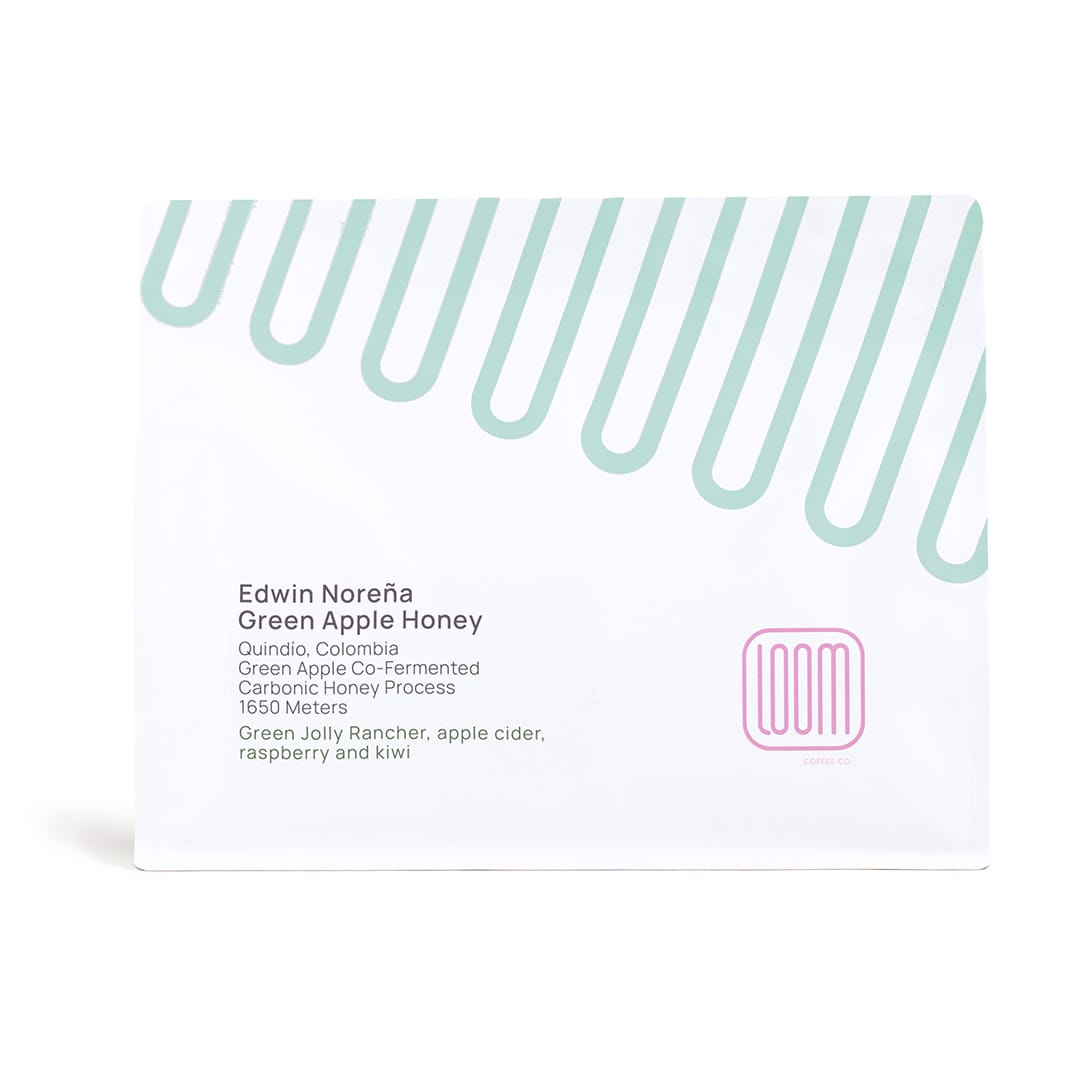
Green Jolly Rancher, apple cider, raspberry and kiwi
Colombia
Quindío
Edwin Noreña
Finca Campo Hermoso
Caturra
Carbonic Honey Green Apple Co-ferment
24-hour anaerobic whole-cherry fermentation, 48-hour carbonic maceration, then 72-hour parchment co-fermentation with mossto, brewer's yeast, glucose, and green apple
1,650 meters
Green Jolly Rancher, apple cider, raspberry and kiwi
Colombia
Quindío
Edwin Noreña
Finca Campo Hermoso
Caturra
Carbonic Honey Green Apple Co-ferment
24-hour anaerobic whole-cherry fermentation, 48-hour carbonic maceration, then 72-hour parchment co-fermentation with mossto, brewer's yeast, glucose, and green apple
1,650 meters
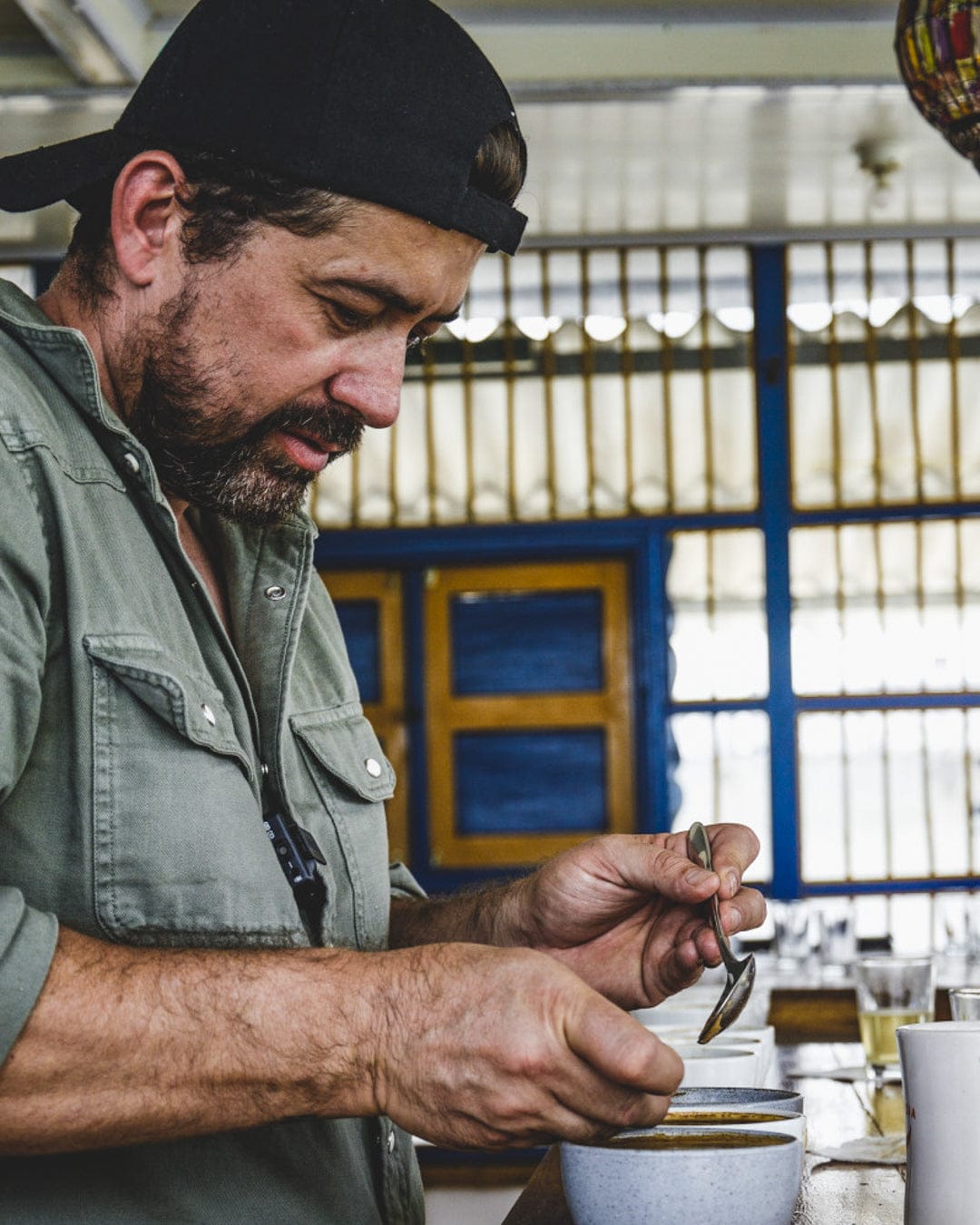
The process is the whole point here. Edwin Noreña starts with Caturra at Finca Campo Hermoso, then runs a carbonic honey co-ferment built around green apple, mossto, glucose, and brewer's yeast. On our cupping table the cup lands on green Jolly Rancher, apple cider, raspberry, and kiwi. It's bright, juicy, and more direct than a coffee built this carefully has any right to be.
That clarity matters because a co-ferment this expressive can easily get muddy. We roast it light-medium so the apple aromatics stay clear and the sweetness has room to land. The cup stays bright, structured, and readable even with all that fruit-forward energy. This is the coffee you hand someone with a tiny grin and a mug, because explanation can wait.
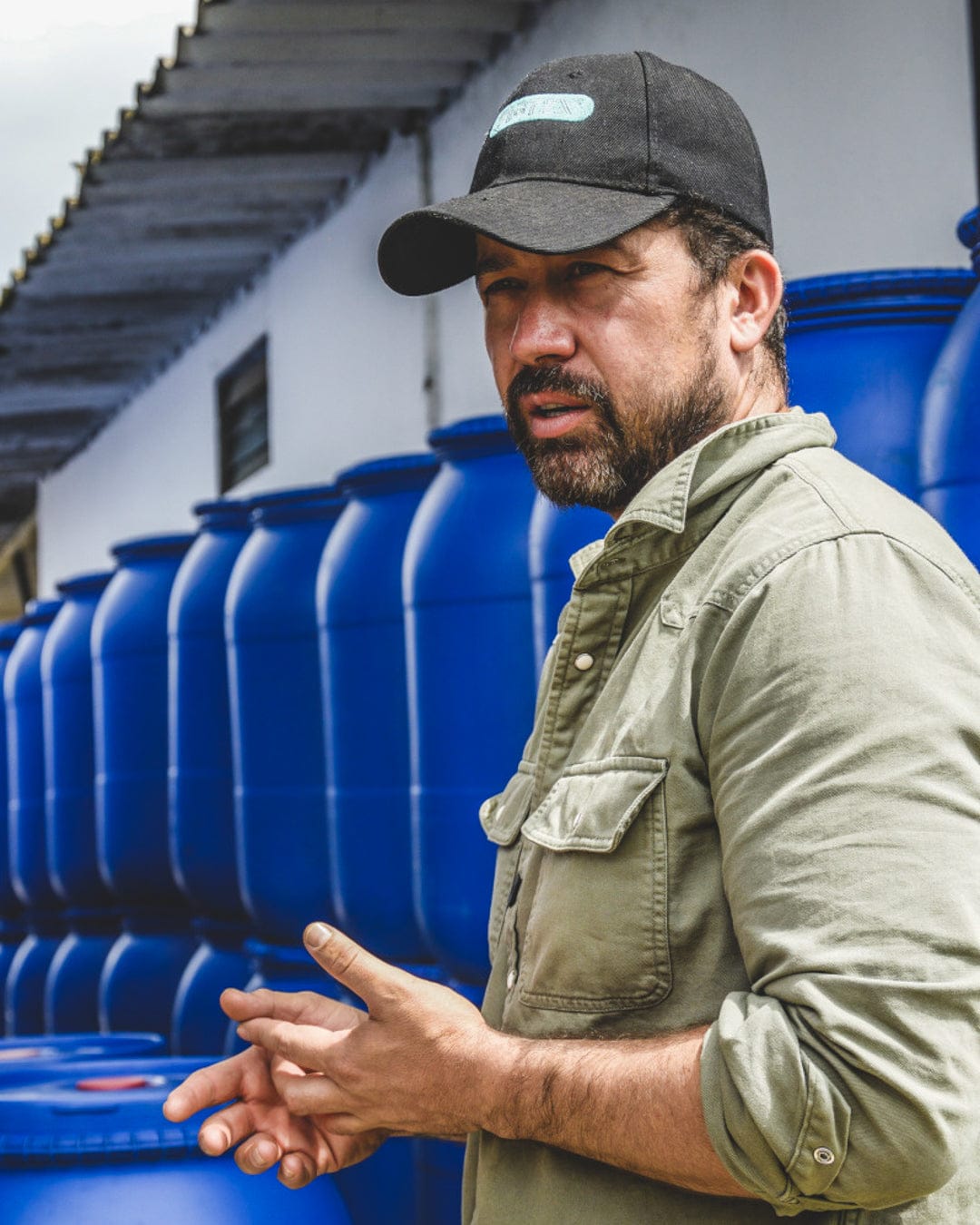
Edwin Noreña is an agroindustrial engineer, Q Grader, Q Processor, and Cup of Excellence judge, and he's the producer behind Finca Campo Hermoso in Colombia's Quindío department. His El Alquimista lots have become reference points for controlled fermentation because he treats process design as a technical discipline. Campo Hermoso now works like a farm and fermentation workshop, with tanks, pH monitoring, temperature tracking, and a growing library of mossto-based fermentations. About 30 families contribute labor to the work.
Caturra is the right choice for this lot because its cup gives the fermentation room to speak. It brings a familiar Colombian frame before Edwin turns up the apple. The apple character comes from a documented fermentation ingredient, while the structure comes from a producer who measures every step. Not many producers can make a co-ferment feel this easy to trace.
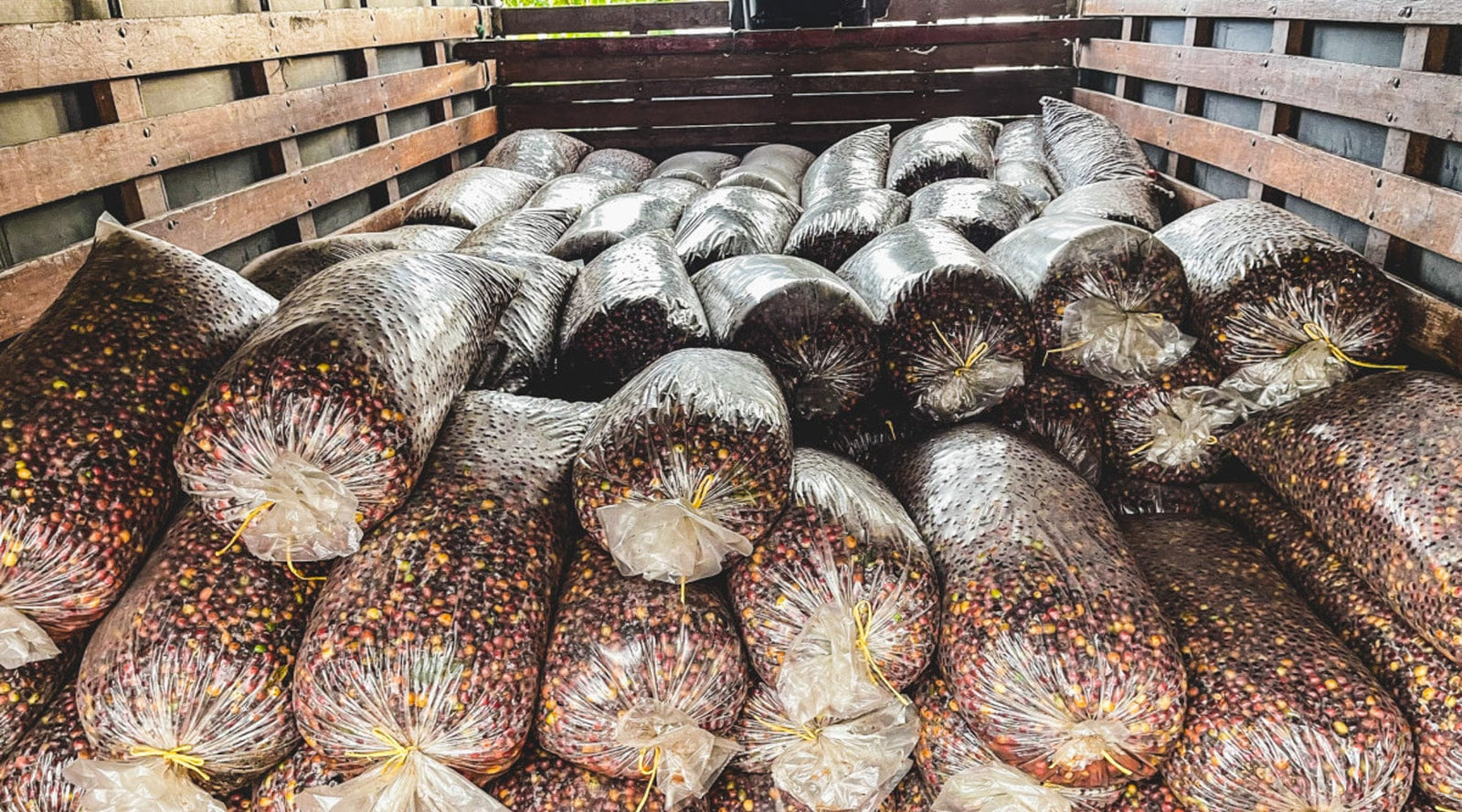
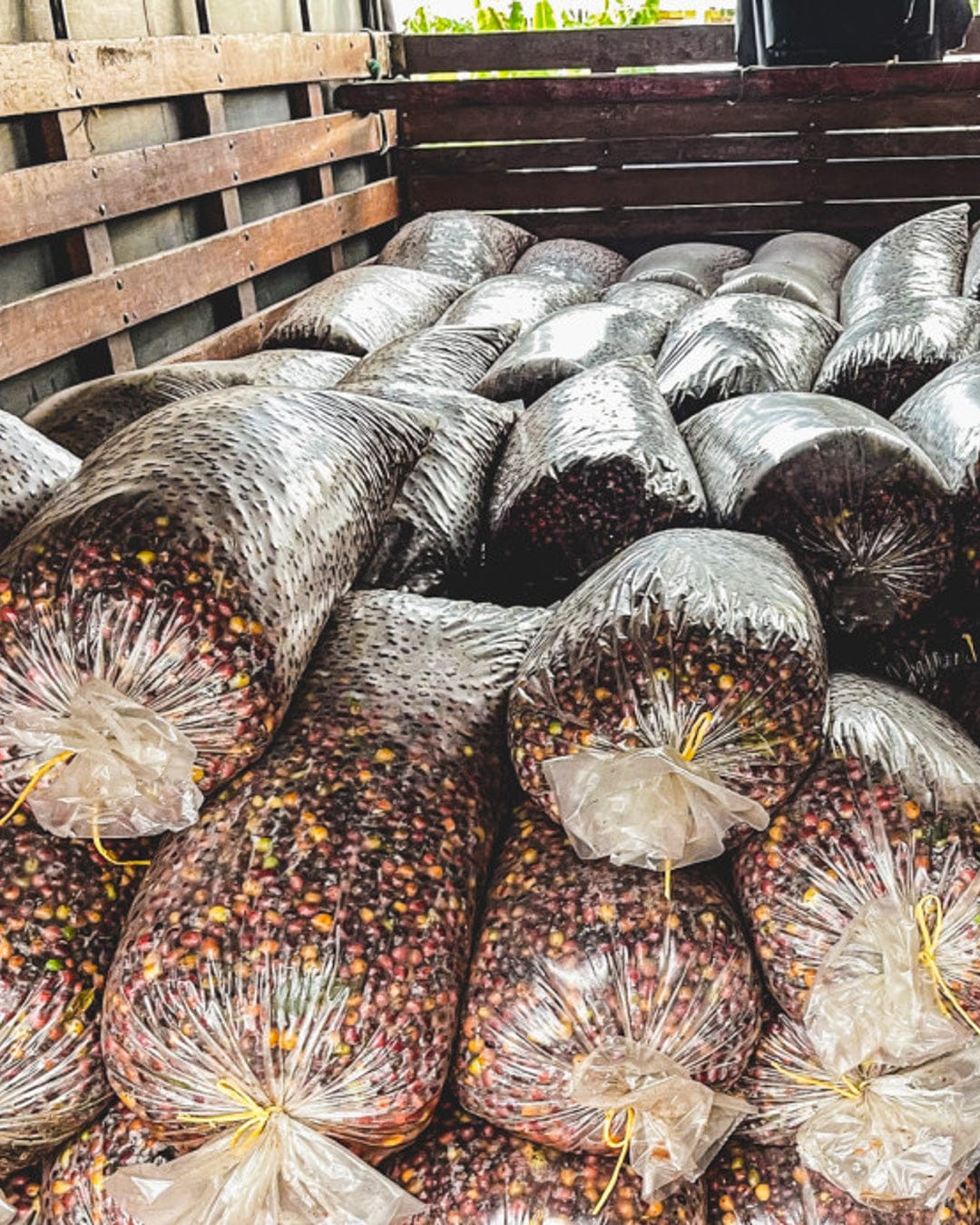
It starts with hand-sorted whole cherry. Edwin ferments it anaerobically for 24 hours, then moves it into a 48-hour carbonic maceration stage, an oxygen-deprived fermentation borrowed from winemaking. Those stages create mossto, the sugary runoff from coffee cherry fermentation. The cherry is then depulped so the parchment coffee can move to the next stage.
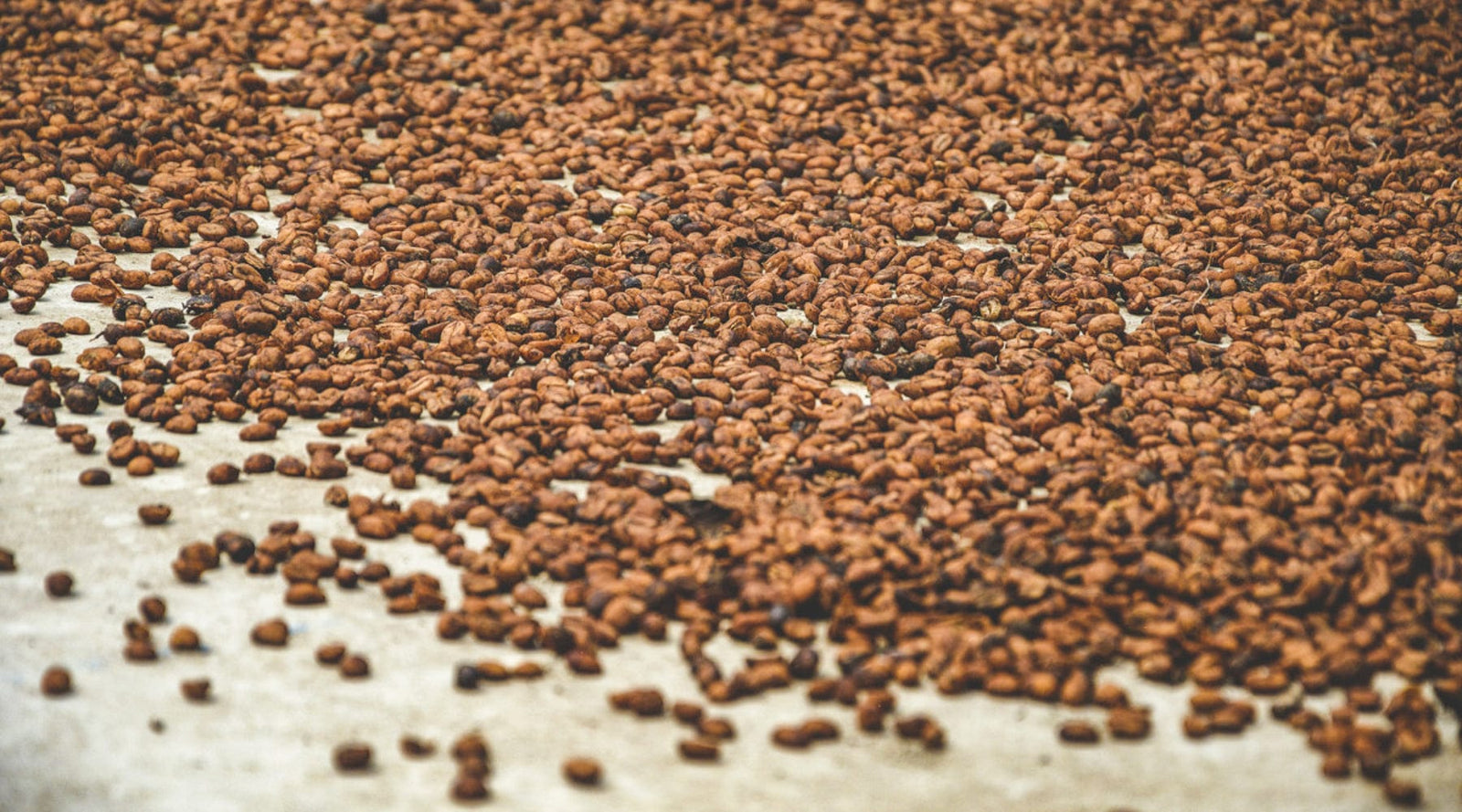
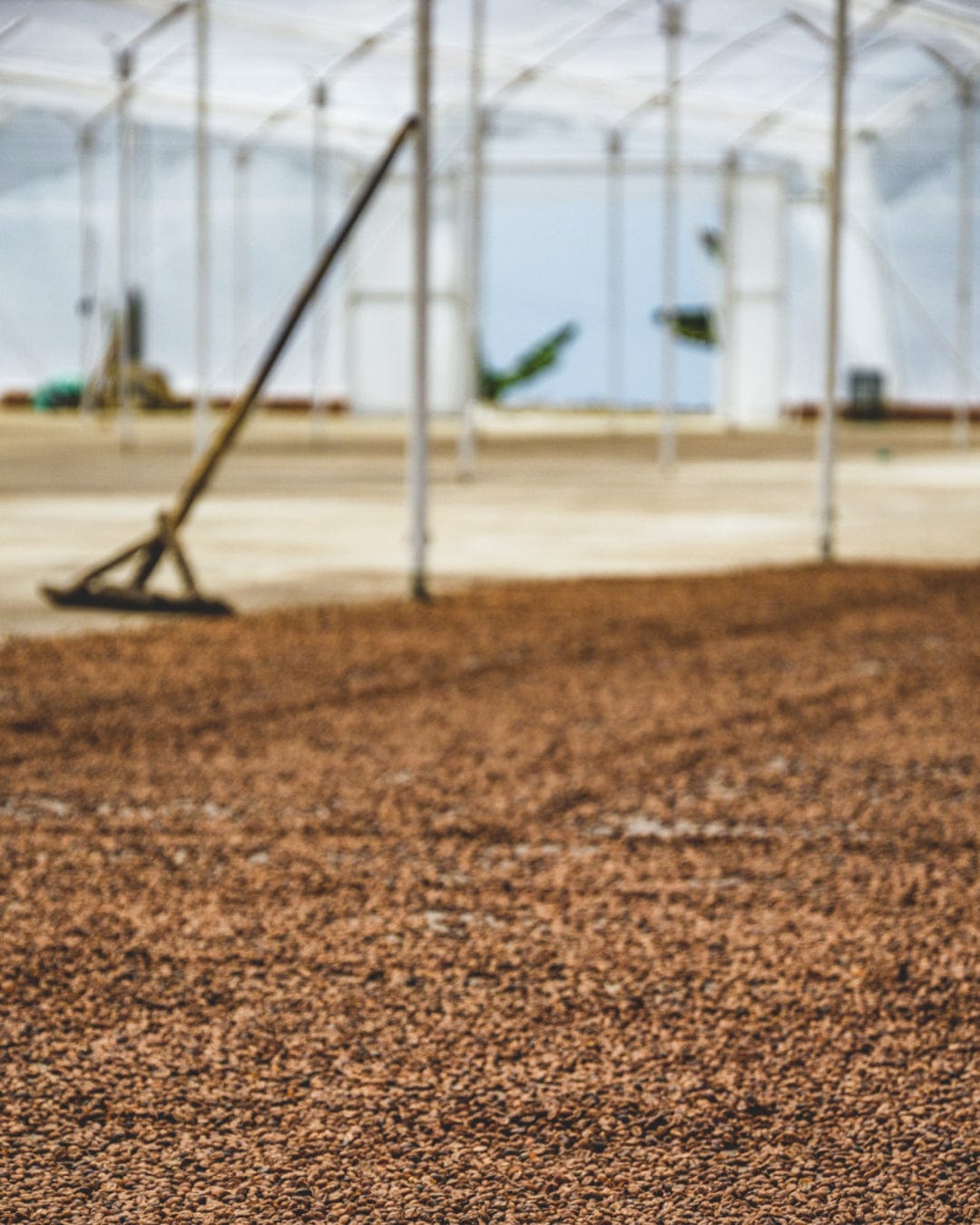
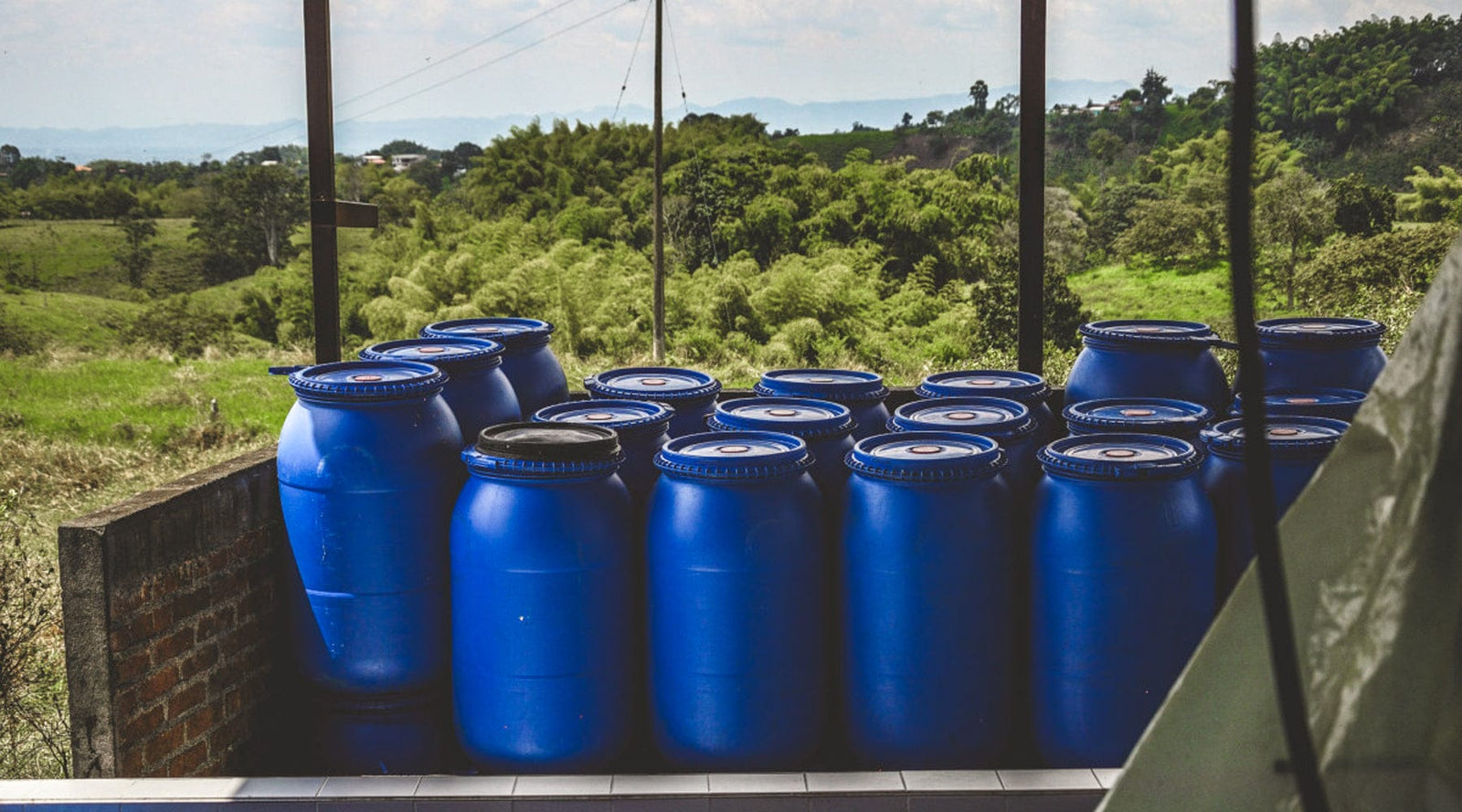
He ferments the mossto separately with brewer's yeast, glucose, and green apple, then mixes it back with the depulped parchment for a 72-hour co-fermentation. That fruit-infused mossto makes up about 30 percent of the mixture. The coffee then dries unwashed on raised beds like a honey process, holding mucilage on the parchment as it stabilizes. Three fermentations, one very clear apple, with coffee structure holding underneath.
Brew Edwin Noreña Green Apple Honey like we do - here’s how.
Highlights clarity and acidity; best with precise grind, flow control, and flat or conical brewers.
| Brew Ratio | 1:15 (e.g., 20g coffee to 300g water) |
| Grind | Medium-fine (like table salt) |
| Water Temp | 92°C / 198°F |
| Total Brew Time | 2:30 - 3:00 min |
| Yield | 275-295g |
Full immersion with coarse grind; great for body, sweetness, and lower-acidity profiles.
| Brew Ratio | 1:15 (e.g., 30g coffee to 450g water) |
| Grind | Coarse (like sea salt) |
| Water Temp | 92°C / 198°F |
| Total Brew Time | 4:00 - 4:30 min |
| Yield | 400-430g |
Pressure extraction with fine grind; isolates intensity, structure, and balance.
| Brew Ratio | 1:2 (e.g., 17g coffee to 34g espresso) |
| Grind | Fine (like powdered sugar) |
| Water Temp | 92°C / 198°F |
| Total Brew Time | 27 - 31 sec |
| Yield | 32-36g |
The Rotation is your coffee membership. Every order is a different single-origin, roasted to order and shipped within 48 hours. Explore our full lineup and find you next favorite.
You set the schedule, adjust or cancel anytime.
Edwin builds the flavor during fermentation. Whole cherry moves through anaerobic fermentation and carbonic maceration, then depulped parchment is co-fermented for 72 hours with mossto, brewer's yeast, glucose, and green apple. On our cupping table, that process shows up as green Jolly Rancher, apple cider, raspberry, and kiwi.
Green apple is part of the fermentation environment. Edwin Noreña ferments mossto with brewer's yeast, glucose, and green apple, then adds that mixture back to depulped parchment coffee for a 72-hour co-fermentation. The apple character comes from the process itself.
Mossto is the sugary liquid released during coffee cherry fermentation. Edwin reuses it as a fermentation medium, similar to how winemakers work with must. In this lot the mossto carries yeast, glucose, and green apple into contact with the parchment coffee.
Edwin Noreña is the producer behind Finca Campo Hermoso in Circasia, Quindío, Colombia. He's an agroindustrial engineer, Q Grader, Q Processor, Cup of Excellence judge, and fermentation consultant. His El Alquimista lots are known for controlled co-fermentations built around specific ingredients and measured process steps.
Caturra is a classic Colombian variety with a familiar cup, and that familiarity lets the fermentation show clearly. Its structure gives Edwin's carbonic honey green apple process room to become the center of the cup.
Start with a V60 or similar conical dripper at 92°C / 198°F, a 1:15 ratio, and a 2:30 to 3:00 brew time to keep the cup bright and aromatic. French press pulls it toward apple cider sweetness, and espresso emphasizes green Jolly Rancher, raspberry, and a kiwi-like finish.