by Loom Coffee Co. 3 min read
A 1:15 ratio, coarse grind, and 93°C/199°F water steeped for 4 minutes produces a full-bodied French press with repeatable results.
French press is the method that gives you your morning back. Grind, pour, walk away, come back to a cup with more body and rounder flavor than your pour-over produces. It's forgiving by design: the coffee sits in water, extraction slows naturally over time, and a 30-second timing mistake won't ruin the cup.
Start at 1:15 (30g coffee to 450g water) with a grind slightly coarser than pour-over. Think coarse kosher salt, not raw sugar. Most people grind far too coarse for French press, chasing the common advice to go as coarse as possible. That produces a thin, underwhelming cup because the water can't extract enough from those large particles in four minutes.
Key adjustment: If your coffee tastes watery, go finer before adding more coffee. If you're getting excessive sediment and a chalky mouthfeel, coarsen one or two clicks. Grind and steep time work as a pair in immersion brewing.
Use 93°C (199°F) as your default. Water just off the boil works for most coffees. Preheat the press with hot water first, because cold glass steals heat from the brewing water and changes extraction.
Temperature shapes the balance between brightness and body. Hotter water accentuates acidity. Cooler water brings out more body and sweetness.
Lighter roasts
Can handle 95°C (203°F). They're denser and need more thermal energy, and the extra brightness suits their character.
Darker roasts
Do better at 90-91°C (194-196°F). Cooler water emphasizes their natural body and sweetness while keeping bitter compounds in check.
Steep for 4 minutes, then decant immediately
Use a timer. After pouring your water, stir gently at 15-20 seconds to break up the bloom and submerge floating grounds. Then set the plunger on top (screen just below the water surface) and wait.
When the timer hits 4:00, press the plunger gently toward the bottom. Don't force it or try to compact the grounds. The press is just a filter. Pressing hard agitates the bed and squeezes bitter compounds into your cup (overextraction). If you feel resistance, ease up and let gravity help.
Decant the entire brew into cups or a preheated carafe as soon as you press. This is the step most people skip, and it's the one that matters most. A French press that's left sitting continues extracting. That's where the muddiness, bitterness, and loss of sweetness come from. Decanting stops the extraction at 4 minutes, preserving the body French press is known for while keeping the sweetness and clarity that get lost in a "set it and forget it" approach.
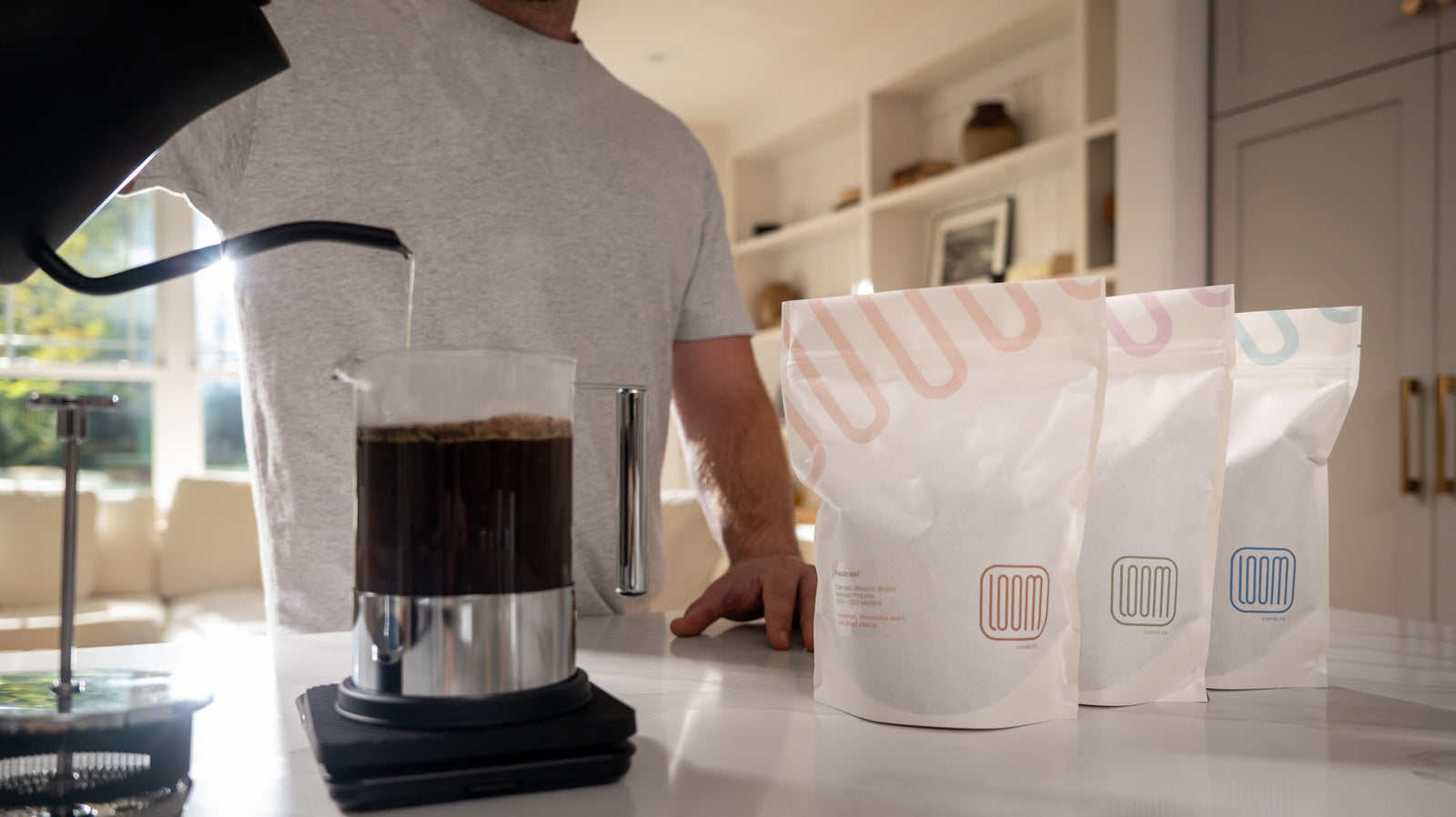
Coffees like our Paubrasil Natural (hazelnut, chocolate malt, dried cherry) are built for this method. The natural processing develops body and sweetness that French press amplifies, and decanting on time keeps those qualities intact.
Recipe: French Press
Start at 1:15 (30g coffee to 450g water) for a standard 3-cup press. This produces a full-bodied cup with repeatable results. If the cup tastes thin, grind finer before adding more coffee. If you want even more body, tighten the ratio to 1:14.
Steep for exactly 4 minutes, then press and decant immediately. Use a timer. Stir gently at 15-20 seconds to break up the bloom and submerge floating grounds, set the plunger on top, and wait until 4:00. Coffee left sitting on the grounds keeps extracting, which is where muddiness and bitterness come from.
The most common cause is leaving brewed coffee sitting on the grounds after pressing. Decant the entire brew into cups or a preheated carafe immediately after pressing to stop extraction. If you're already decanting on time, coarsen the grind slightly or reduce steep time by 30 seconds. Also check that you're pressing gently; compacting the grounds squeezes bitter compounds into the cup.
Grind slightly coarser than pour-over, like coarse kosher salt. Most people grind far too coarse for French press, chasing the common advice to go as coarse as possible. That produces a thin, underwhelming cup because the water can't extract enough from those large particles in four minutes. If your coffee tastes watery, go finer.
Yes. Preheat the press with hot water before brewing because cold glass steals heat from the brewing water and changes extraction. Pour hot water into the empty press, let it sit for 30 seconds, then discard and add your coffee and fresh brewing water.
Excessive sediment and a chalky mouthfeel usually mean your grind is too fine. Coarsen by one or two clicks. If sediment persists, try skimming floating grounds with a spoon before pressing. Press the plunger gently and don't try to compact the grounds at the bottom.