Your Cart is Empty

by Loom Coffee Co. 3 min read

A 1:16 ratio with freshly ground medium coffee and filtered water produces specialty-quality drip coffee in any automatic brewer.

Your drip machine isn't the problem. It hits the same extraction window as a pour-over. The gap between a forgettable pot and a genuinely good one comes down to six things you control in about three minutes of extra effort, and most of them have nothing to do with the machine itself.

What do you need?

  • Automatic drip brewer (any model)
  • Burr grinder (the single most impactful upgrade you can make)
  • Kitchen scale (grams)
  • Filters (paper or metal, your choice)
  • Filtered water
  • 20g coffee per 320g water

What ratio and grind size should you start with?

Start at 1:16 (20g coffee to 320g water) with a medium grind. Medium grind looks and feels like granulated sugar. That ratio is the SCA-recommended starting point, and it lands in the center of the brewing control chart's target zone.

If you don't have a scale, that's roughly 3 level tablespoons per 12 ounces of water. But a kitchen scale removes guesswork permanently.

Check the spent coffee bed after brewing. If the top looks evenly dark and uniform, extraction was balanced. If it's pitted, muddy, or has dry patches, your grind needs adjustment. Dry patches mean the spray head isn't reaching everywhere. Waterlogged grounds mean you're too fine.

How does water temperature affect the cup?

You don't control this directly on most machines, but your water quality matters more. Water makes up 98.5% of your finished cup. The target is 50-100 parts per million of total dissolved minerals. Skip distilled water. It lacks the minerals needed to pull flavor from the grounds and produces flat, lifeless coffee.

If you're using an SCA-certified brewer, temperature is handled for you. If not, the machine still gets close enough that your other variables matter far more. The preheat step (running an empty brew cycle first) also helps by warming the internal plumbing, so the water hitting your grounds is closer to optimal temperature from the first drop.

What can you actually control?

Six adjustments, three minutes of effort, noticeably better coffee.

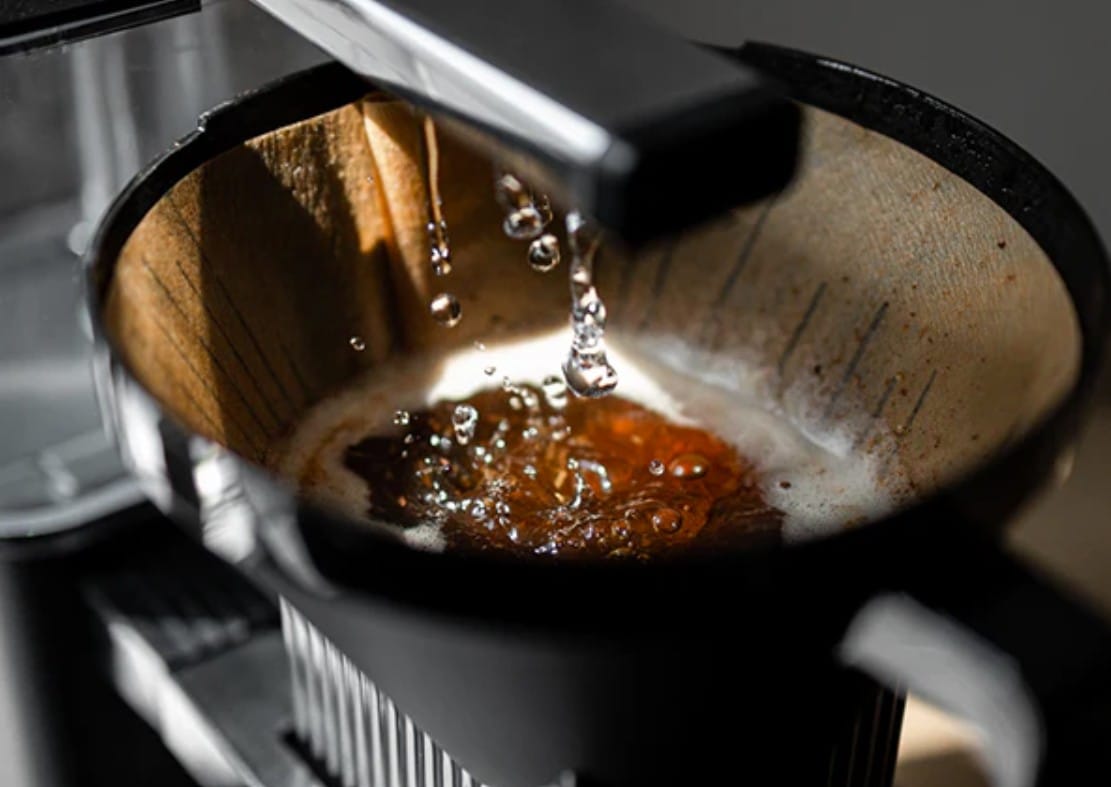
  1. Preheat and rinse in one step. Place your paper filter in the brew basket, fill the reservoir with water, and run a full brew cycle with no coffee. This does two things at once: rinses the paper filter (removing papery off-flavors) and preheats the carafe so your brewed coffee doesn't lose heat to cold glass. Discard the hot water from the carafe, then brew as normal with your rinsed filter already in place. Many people experience inconsistent cup temperature from their drip brewer. This fixes it.
  2. Grind fresh, grind medium. Pre-ground coffee loses volatile aromatics within hours. A burr grinder (even a $40 hand grinder) is the single upgrade that delivers the biggest improvement.
  3. Weigh your coffee. The scoop that came with your machine is approximate at best.
  4. Stir the bed. Open the basket 5-10 seconds after water starts flowing and give the grounds a gentle stir. This breaks up channels where water flows too fast and ensures the entire bed contributes to the cup. Stir once more when the brew cycle finishes.
  5. Brew smaller. Match your batch to what you'll drink within 30 minutes. Coffee on a hot plate degrades fast. A half-pot brewed fresh beats a full pot sitting for an hour.
  6. Use filtered water. Not distilled. A carbon filter (like a Brita) handles chlorine and off-flavors without stripping the minerals needed for extraction.

Paubrasil Natural recommendation

For our Paubrasil Natural (hazelnut, chocolate malt, dried cherry), the roasting team recommends a 1:15.5 ratio with a medium-coarse grind, targeting a 3:00-3:30 minute brew. For brighter coffees, stick with 1:16 and a standard medium grind.

What should you adjust when the cup tastes off?

Troubleshooting: taste adjustments
  • Sour (underextracted): Grind finer. The water is rushing through without extracting enough.
  • Thin (lacking body): Grind finer. If you're using a paper filter and want more body, try a metal mesh filter instead.
  • Flat or dull: Try a brighter coffee (lighter roast, washed process) or grind slightly finer to increase extraction.
  • Bitter and harsh: Grind coarser. Or check whether the pot sat too long on the hot plate.
  • Weak and watery: Increase your dose. Move from 1:16 to 1:15 and see if the body fills in.

Recipe: Automatic Drip

  • Coffee: 20g per 320g water
  • Ratio: 1:16
  • Grind: Medium (granulated sugar)
  • Water: Filtered, not distilled
  • Preheat/rinse: Run one empty brew cycle with the paper filter in place. Discard the water.
  • Stir: At 5-10 seconds after water starts, and again at cycle end
  • Batch size: Only what you'll drink within 30 minutes

Start at 1:16 (20g coffee to 320g water), which is the SCA-recommended starting point. If you don't have a scale, that's roughly 3 level tablespoons per 12 ounces of water. If the cup tastes weak and watery, tighten the ratio to 1:15 and see if the body fills in.

Water makes up 98.5% of your finished cup, so yes. Target 50-100 parts per million of total dissolved minerals. Skip distilled water; it lacks the minerals needed to pull flavor from the grounds and produces flat, lifeless coffee. A carbon filter like a Brita handles chlorine and off-flavors without stripping the minerals needed for extraction.

Yes. Place your paper filter in the brew basket, fill the reservoir, and run a full brew cycle with no coffee. This does two things at once: rinses the paper filter (removing papery off-flavors) and preheats the carafe so your brewed coffee doesn't lose heat to cold glass. Many people experience inconsistent cup temperature from their drip brewer, and this fixes it.

A burr grinder is the single upgrade that delivers the biggest improvement for drip coffee. Pre-ground coffee loses volatile aromatics within hours. Even a $40 hand burr grinder produces a more uniform particle size than a blade grinder, which means more even extraction and a cleaner cup.

Grind coarser. If the water can't flow through the bed freely, it over-extracts and pulls bitter compounds. Also check whether the pot sat too long on the hot plate; coffee degrades quickly on a heating element. Brew only what you'll drink within 30 minutes for the clearest flavor.

Check the spent coffee bed after the brew cycle finishes. If the top looks evenly dark and uniform, extraction was balanced. Dry patches mean the spray head isn't reaching everywhere. Waterlogged, muddy grounds mean your grind is too fine. Stirring the bed 5-10 seconds after water starts flowing helps break up channels and ensures the entire bed contributes to the cup.