Your Cart is Empty

by Loom Coffee Co. 3 min read

A 1:16 ratio, medium-fine grind, and 93°C/199°F water will produce a balanced pour-over with most coffees in 2:30 to 3:30.

Pour-over gives you more control over your cup than any other home brew method. Six variables, one cup, and a feedback loop built on what you taste. You don't need to master all six at once. You need a reliable starting point and the confidence to adjust from there.

What do you need?

  • Pour-over dripper (V60, Kalita Wave, Chemex, or similar)
  • Paper filters matched to your dripper
  • Gooseneck kettle (temperature-controlled if possible)
  • Kitchen scale (grams)
  • Timer
  • Burr grinder
  • 20g coffee, 320g water

What ratio and grind size should you start with?

Start at 1:16 (20g coffee to 320g water) with a medium-fine grind. That lands you in the middle of the optimal extraction window, with room to adjust in any direction. Medium-fine looks and feels like table salt between your fingers.

Cone drippers (V60, Chemex)

Drain faster due to a single large opening at the base. Grind slightly finer to compensate and slow the drawdown. Produces a cleaner, brighter cup with more clarity.

Flat-bed drippers (Kalita Wave, Stagg)

Drain slower through restricted openings. Go slightly coarser to keep flow moving. Produces a rounder, more even cup. Flat-beds are more forgiving of pour technique.

If you're brewing our Paubrasil Natural on a flat-bed, a medium-coarse grind (closer to beach sand) brings out the chocolate and nut character without over-extracting.

How does water temperature affect the cup?

Use 88-96°C (190-205°F), with 93°C (199°F) as the default for most coffees. Temperature shapes the balance between acidity and body. Hotter water accentuates brightness and acidity. Cooler water brings out more body and sweetness. It's a tradeoff along a spectrum.

Recommended temperature ranges by roast level

Light roasts (94-96°C / 201-205°F)
Medium roasts (92-93°C / 198-199°F)
Darker roasts (88-91°C / 190-196°F)

Quick rule: If your cup tastes flat or dull, raise the temperature to bring acidity forward. If it's too bright and lacks body, drop the temperature a few degrees.

How should you pour?

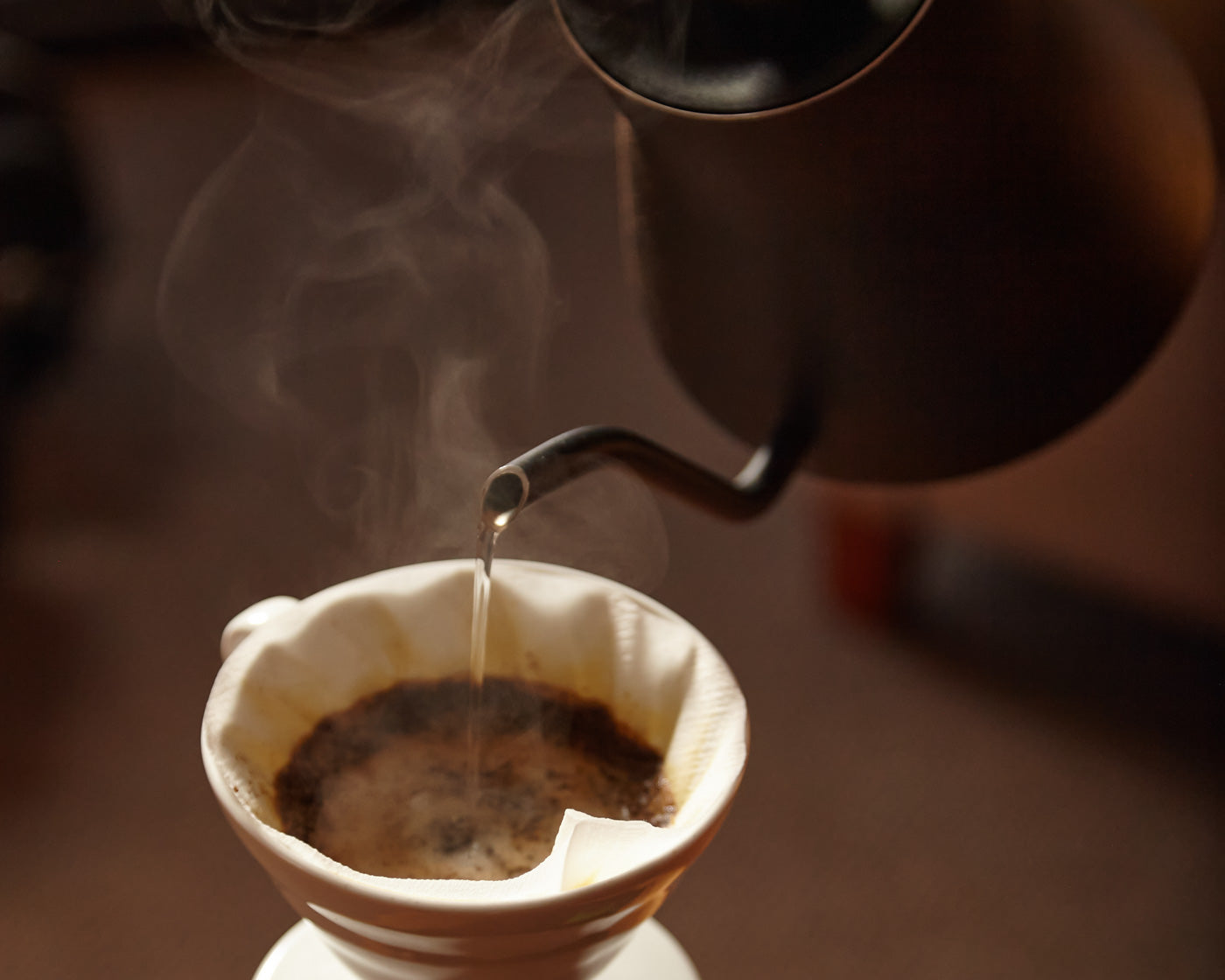
Bloom first, then pour in steady, concentric circles. Pour twice your coffee dose in water (40g on 20g of coffee) and wait 30 to 45 seconds. You'll see the bed rise and bubble as CO2 escapes. When it starts to collapse, the grounds are ready.

After the bloom, pour in slow, even circles that cover the bed without hitting the filter walls directly. Stay about a finger's width inside the edge. For most coffees, pulse pouring (2-3 pours with short pauses) gives you more control than one continuous pour. A gentle swirl of the dripper after each pour flattens the bed and evens out extraction.

3.0 min

Target total brew time (including bloom): 2:30 to 3:30

What should you adjust when the cup tastes off?

Troubleshooting: taste adjustments
  • Sour (underextracted): Grind finer to increase extraction. This is almost always the right first move.
  • Thin (lacking body): Grind finer and/or lower your water temperature. Cooler water shifts the balance toward body and sweetness.
  • Flat or dull: Raise water temperature to bring acidity and brightness forward.
  • Bitter and harsh: Grind coarser or pour faster. You've pulled too much from the grounds.
  • Watery but not sour: Your extraction is fine, but the ratio is too dilute. Use more coffee or less water.

Change one variable at a time. That's how you learn what each adjustment does.

Recipe: Pour-Over (V60 / Kalita Wave / Chemex)

  • Coffee: 20g
  • Water: 320g at 93°C / 199°F
  • Ratio: 1:16
  • Grind: Medium-fine (table salt)
  • Bloom: 40g water, 30-45 seconds
  • Pour: Pulse pour in concentric circles, 2-3 pours
  • Total time: 2:30-3:30

Start at 1:16, which means 20g of coffee to 320g of water. This lands in the middle of the extraction range and gives you room to adjust in either direction. If your cup tastes watery but not sour, tighten the ratio to 1:15 by using more coffee or less water.

Target 2:30 to 3:30 total brew time, including the bloom. If your brew finishes under 2:30, your grind is too coarse and water is draining too fast. If it runs past 3:30, grind coarser to speed up the drawdown.

Use 93°C (199°F) as your default for most coffees. Light roasts do well at 94-96°C (201-205°F) because the denser structure needs more thermal energy. Darker roasts benefit from 88-91°C (190-196°F), where cooler water emphasizes body and sweetness while keeping bitter compounds in check.

Sour taste is a sign of underextraction, meaning water didn't pull enough soluble material from the grounds. Grind finer to increase surface area and slow the drawdown. This is the right first move more often than not.

The bloom is a 30-45 second pre-wet phase where you pour roughly twice the coffee dose in water (40g on 20g of coffee) and wait. CO2 trapped from roasting escapes as the bed rises and bubbles. Once it starts to collapse, the grounds are degassed and ready for even extraction.

Flat-bed drippers like the Kalita Wave are more forgiving of pour technique because their restricted openings control the flow rate for you. Cone drippers like the V60 drain faster through a single large opening, which means your pour rate and grind size need to be more precise. Start with a flat-bed if consistency matters more than experimentation right now.